Restaurant Equipment Cleaning in Garden Grove
Detailed cleaning for commercial cooking equipment, prep areas, and hard-to-reach surfaces, planned around your kitchen's operating schedule.
Dependable Care for Hardworking Commercial Kitchens
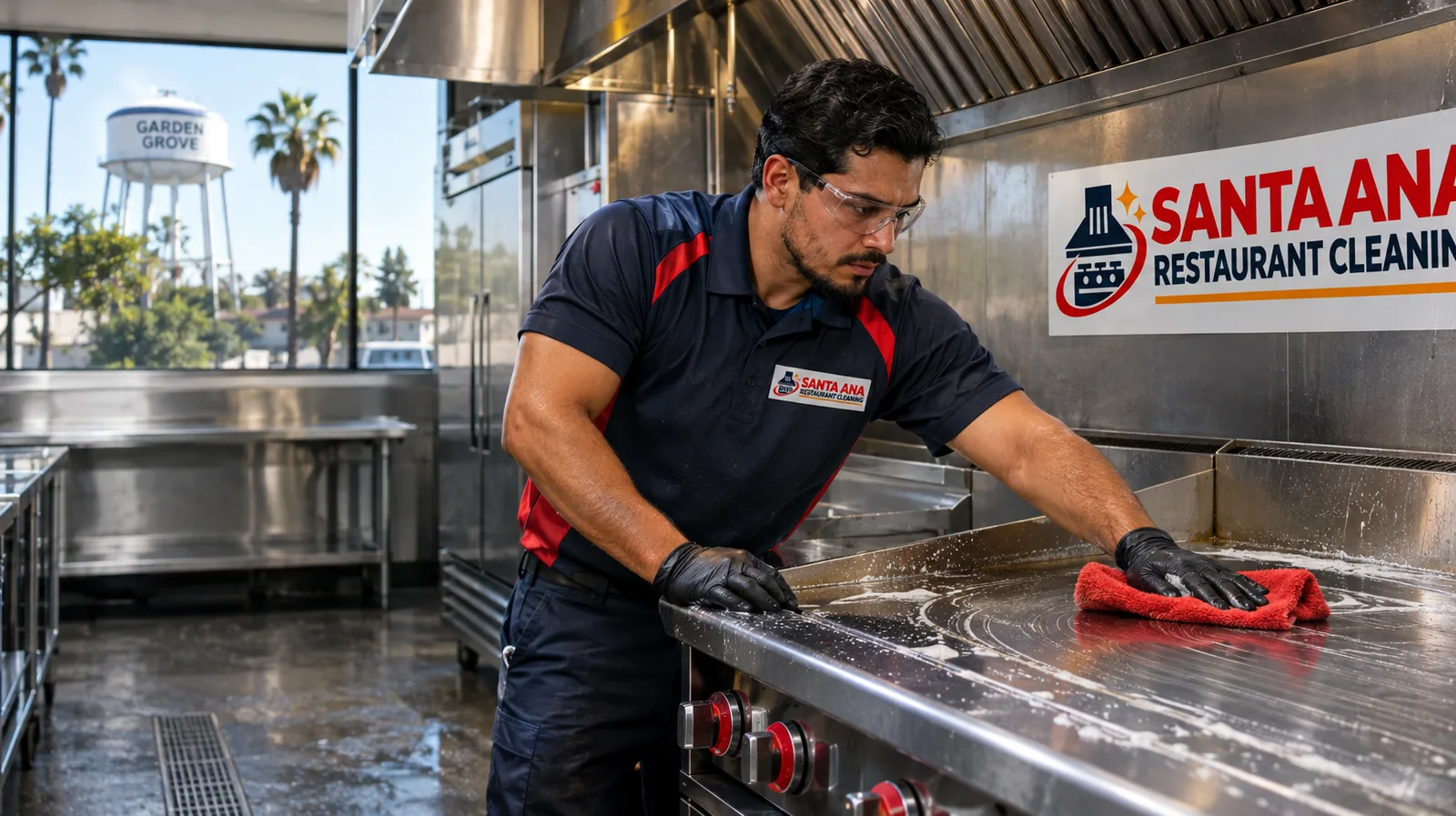
Restaurant Equipment Cleaning Garden Grove service should address the grease, carbon, food residue, and dust that routine closing work cannot fully reach. Santa Ana Restaurant Cleaning handles detailed equipment cleaning for restaurants, cafés, bakeries, commissaries, and other food-service operations. We build the scope around the equipment present, its condition, access requirements, and the kitchen's service hours.
Our technicians focus on accessible surfaces and removable components while respecting manufacturer instructions and sensitive controls. Working from our Santa Ana base, Santa Ana's local restaurant service travels to Garden Grove with a practical plan for protecting nearby prep surfaces, controlling runoff, and returning the work area in orderly condition. Before work begins, we clarify which units are included, what the restaurant must cool down or move, and whether any equipment requires special handling.
A professional visit complements daily sanitation rather than replacing it. Staff should continue cleaning food-contact surfaces at the required frequency and follow the facility's approved procedures. Periodic detail work targets buildup around equipment sides, legs, casters, undersides, seams, and other areas that are easy to miss during a busy close.
What Restaurant Equipment Cleaning in Garden Grove Can Cover
A tailored scope may include accessible exterior and interior surfaces on ranges, ovens, fryers, griddles, charbroilers, steam tables, refrigerators, freezers, prep tables, shelving, and selected small equipment. Removable racks, trays, grease pans, knobs, and guards can be treated when their construction and manufacturer guidance permit it. Floors, walls, and exposed surfaces directly around the listed units may also be included when specified in the work order.
The method depends on the soil and the equipment. Degreasing helps break down oily residue. Manual agitation works buildup out of corners and textured surfaces. Scraping may be appropriate for carbonized deposits on suitable cooking surfaces, while low-moisture methods are safer around electrical controls, igniters, insulation, motors, and open connections. Chemicals need the correct label use, dilution, dwell time, and rinse procedure for the surface involved.
Some work requires a different qualified provider. Cleaning does not include repairing gas lines, opening energized electrical assemblies, servicing refrigeration circuits, or disassembling components beyond the agreed scope. Exhaust hood and duct cleaning is also a distinct operation with its own access and fire-safety requirements. We identify these boundaries before the job starts.
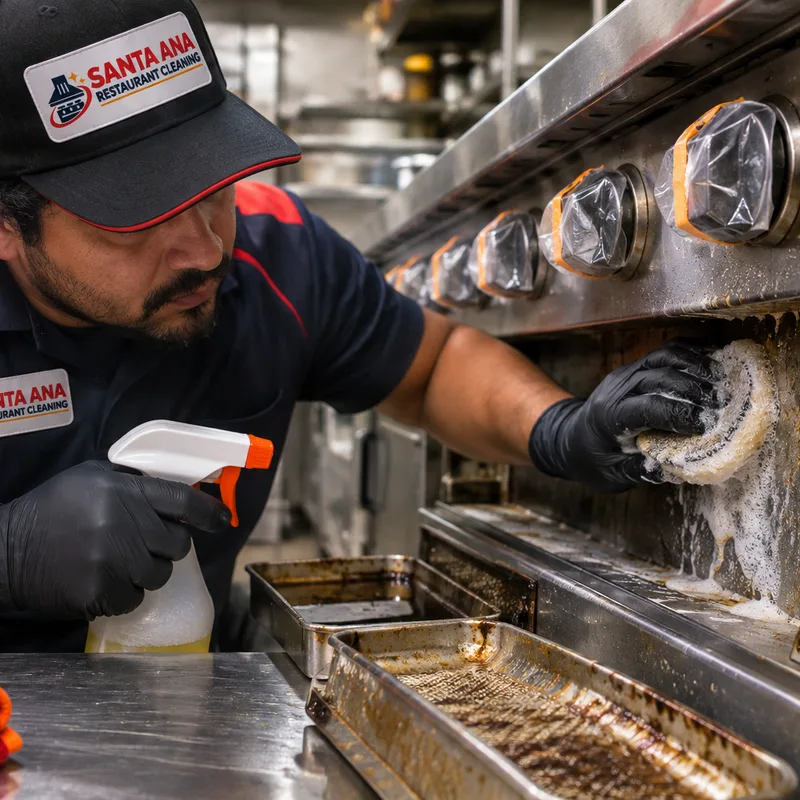
Methods are selected for the soil, surface, and nearby controls.
Cooking Line Equipment
Ranges, griddles, charbroilers, ovens, fryers, steam equipment, and warming units can be cleaned to an agreed level after shutdown and safe cooling.
Cold-Side Equipment
Refrigerator and freezer exteriors, reachable interiors, gaskets, shelves, and accessible condenser-area surfaces may be included when the unit permits safe access.
Prep and Storage Fixtures
Stainless prep tables, worktops, shelving, carts, and racks are cleaned with attention to seams, legs, wheels, undersides, and wall contact points.
Behind and Beneath Units
Movable equipment can be repositioned when connections, weight, and clearances allow it. The scope can address exposed floors, walls, casters, and neighboring surfaces.
Removable Components
Racks, trays, pans, guards, filters associated with the listed equipment, and other detachable parts can be treated when approved for the chosen method.
Targeted Detail Work
Service can focus on a problem area, a selected equipment group, or a broader kitchen reset before an opening, management change, or scheduled inspection.
How We Plan Restaurant Cleaning in Garden Grove
-
01
Review the Kitchen and Priorities
We identify the equipment, buildup, sensitive components, access limits, and the result the operator expects. Photos and an equipment list can help define the initial scope.
-
02
Set the Schedule and Preparation Plan
We agree on a workable service window and explain what should be cooled, emptied, disconnected by authorized staff, or moved before arrival. Garden Grove restaurants near busy commercial corridors may prefer work after closing or during a planned dark period.
-
03
Protect Adjacent Areas
Technicians isolate the work zone, remove or cover nearby food and clean utensils, place floor protection where needed, and organize chemicals and tools to control cross-contamination.
-
04
Clean by Surface and Soil Type
The crew applies the appropriate degreasing, agitation, scraping, rinsing, and drying methods. Electrical controls and other sensitive areas receive controlled, low-moisture treatment.
-
05
Inspect and Return the Area
We check included surfaces, replace approved removable parts, wipe surrounding contact points, and review any inaccessible buildup or maintenance concern observed during the work.
Local Scheduling Without Disrupting Service
Garden Grove has restaurant activity around Harbor Boulevard, Garden Grove Boulevard, and the commercial area near the Outlets at Orange. Kitchens in these corridors often operate long service windows, so access planning matters as much as cleaning technique. A useful schedule accounts for last ticket time, cooling periods, staff departure, alarm access, and the time needed for cleaned parts to dry before startup.
Southern California's warm conditions can add heat to a closed kitchen after cooking equipment shuts down. Fryers, griddles, ovens, and charbroilers must cool sufficiently before technicians can work safely and before certain products can be applied. Waiting for safe temperatures is part of the schedule, not idle time.
Santa Ana Restaurant Cleaning can coordinate one-time detail cleaning or recurring visits based on equipment use and observed buildup. High-volume fry and grill lines may need attention more often than lightly used holding equipment. The right interval is set after reviewing the actual kitchen rather than applying one calendar to every operation.
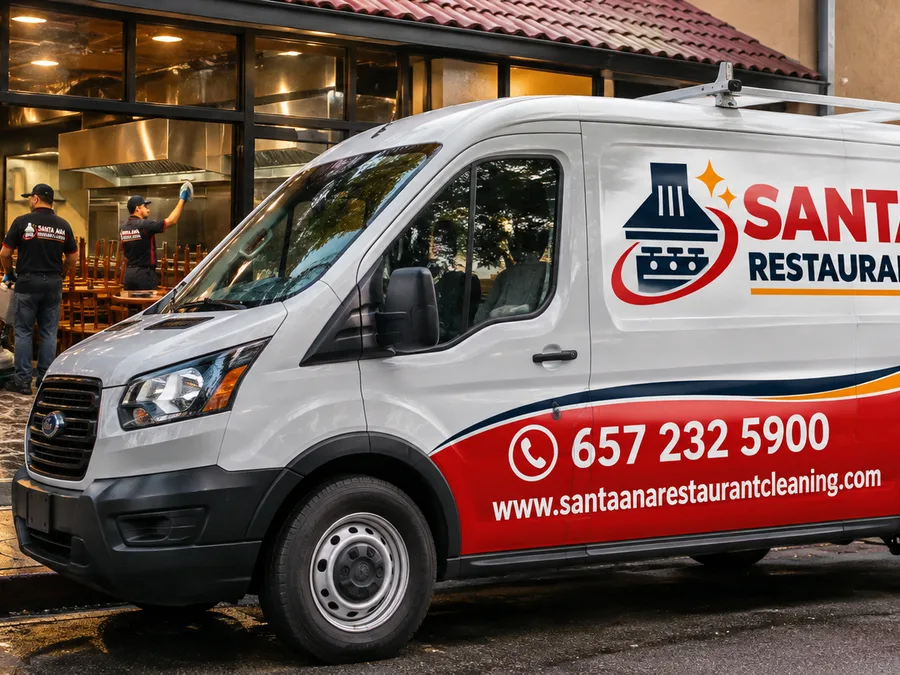
Off-hours planning protects service continuity and gives hot equipment time to cool.
A Clear Scope Protects Your Kitchen and Budget
A useful proposal identifies the equipment and surfaces included, the expected access, the preparation required from restaurant staff, and any exclusions. It should also state whether equipment interiors, removable components, surrounding floors, or wall areas are part of the work. Broad phrases such as “deep clean the kitchen” leave too much room for different interpretations.
Condition affects the approach. Fresh grease may respond to standard degreasing, while layered carbon can require repeated treatment and careful mechanical action. Painted finishes, aluminum, seasoned cooking surfaces, damaged gaskets, corroded fasteners, and worn labels may limit what can be safely cleaned. A pre-service review helps separate removable soil from permanent staining, oxidation, or physical damage.
The restaurant also has responsibilities. Food, single-use items, and sanitized utensils should be removed from the work zone. Equipment must be shut down according to the operator's procedures, and only authorized personnel should disconnect gas, electrical, or water connections. After cleaning, restaurant management remains responsible for safe startup, temperature checks, and any required food-contact sanitizing under its operating procedures.
Get a written equipment list, preparation plan, service window, and clear exclusions before cleaning begins.
Call for a Free QuoteQuestions About Restaurant Equipment Cleaning Garden Grove
How much does restaurant equipment cleaning cost in Garden Grove? +−
Pricing depends on the number and type of units, grease or carbon buildup, access, and the cleaning window. A small targeted job generally costs less than a full cooking-line detail with removable parts and surrounding surfaces. Equipment that must cool for an extended period, be carefully repositioned, or receive repeated carbon treatment adds labor. An on-site review or detailed equipment list is the best basis for a written quote.
Can equipment cleaning be scheduled after our restaurant closes? +−
Yes, off-hours scheduling is often available when access, staffing, and the amount of work are confirmed in advance. The schedule must include shutdown and cooling time for fryers, ovens, griddles, and charbroilers. For Garden Grove kitchens with late service along Harbor Boulevard or Garden Grove Boulevard, the work may need to begin after the last close-down tasks or during a planned non-service period.
Do we need to empty and shut down the equipment first? +−
Yes, restaurant staff generally need to remove food and utensils, shut down listed equipment, and empty approved compartments before service. The exact preparation varies by unit. Only authorized personnel should handle utility disconnections, and refrigeration contents need an approved temperature-controlled location if an interior cleaning requires an extended shutdown.
Can you clean behind heavy cooking equipment? +−
Access behind heavy equipment is possible only when the unit can be moved safely without straining fixed gas, electrical, water, drainage, or fire-suppression connections. We review casters, clearances, equipment weight, and utility restraints before movement. If a qualified trade must disconnect a unit, that work should be arranged separately before the cleaning appointment.
How long does a commercial kitchen equipment cleaning take? +−
A targeted equipment group may take several hours, while a larger line or heavily soiled kitchen may require a full shift or staged visits. Cooling time, removable parts, carbon buildup, tight access, and drying requirements affect the duration. We estimate the work window after reviewing the equipment list and current condition.
How often should restaurant equipment receive detailed cleaning? +−
The interval should be based on usage, grease production, equipment design, and the buildup found during routine checks. A high-output fry or grill station generally needs more frequent detail work than lightly used warming or storage equipment. Daily food-contact cleaning must continue regardless of the periodic professional schedule.
Does this service include exhaust hood and duct cleaning? +−
Equipment cleaning does not automatically include the exhaust hood, ductwork, or rooftop fan. Those systems require a separately defined scope, suitable access, and methods specific to grease-exhaust systems. If the cooking line and exhaust system both need attention, scheduling should be coordinated so one job does not soil surfaces completed by the other.
Can cleaning remove every stain and mark? +−
Cleaning can remove suitable grease, food residue, and carbon deposits, but it cannot reverse corrosion, heat discoloration, etched metal, failed coatings, or worn components. Aggressive treatment may damage aluminum, paint, labels, gaskets, or seasoned surfaces. We identify visible limitations and select a method that balances soil removal with surface protection.
Plan a Cleaner, More Serviceable Kitchen
Tell Santa Ana Restaurant Cleaning which equipment needs attention, when your kitchen is available, and what buildup concerns you. We will help define the preparation, scope, and realistic service window for your Garden Grove operation.