
Commercial Kitchen Floor Cleaning
Remove grease buildup, restore traction, and keep tile and grout easier to maintain with a cleaning plan built around your kitchen's flooring, equipment layout, and operating schedule.
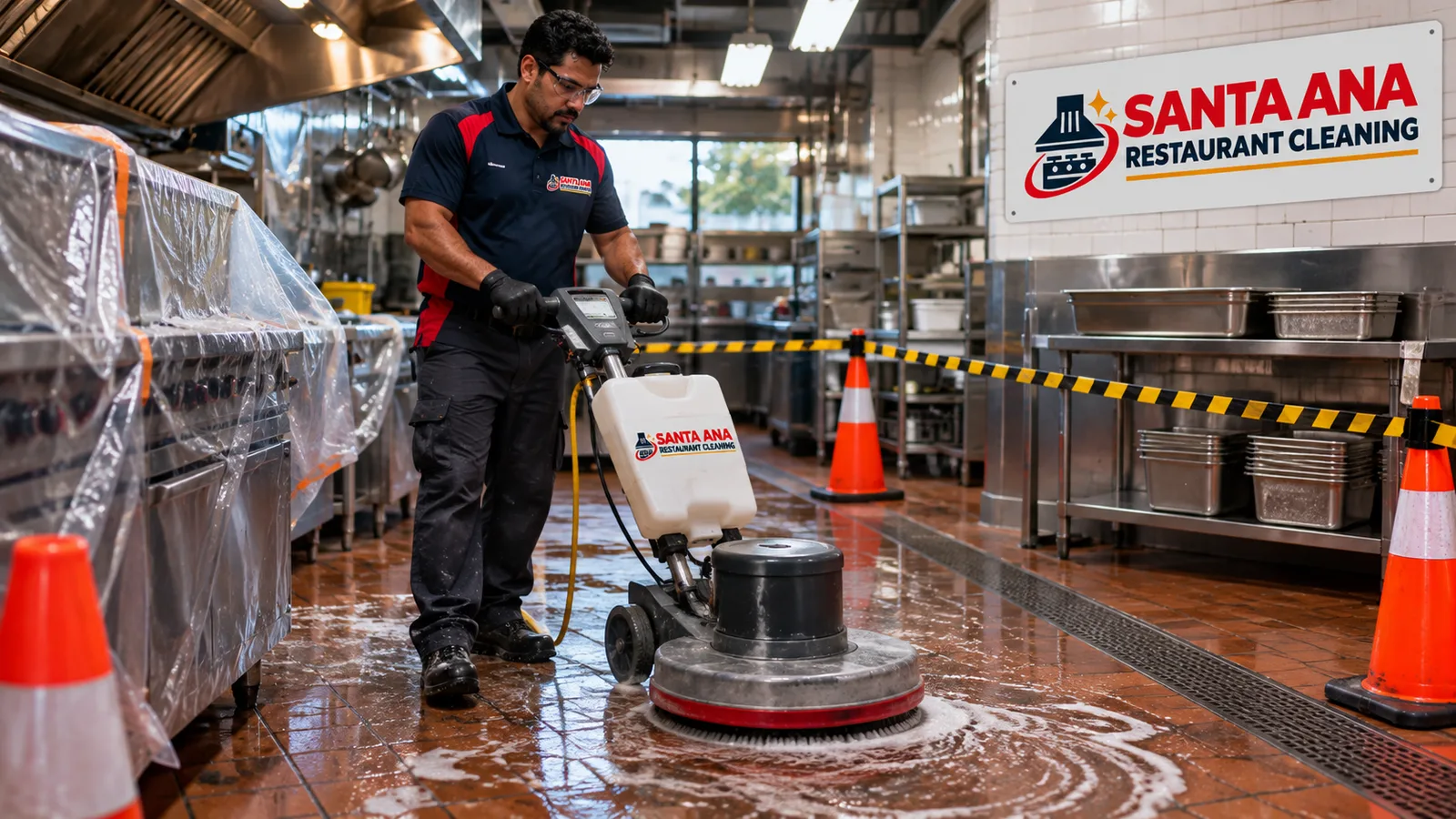
Grease Removal for Working Restaurant Kitchens
Commercial Kitchen Floor Cleaning addresses the grease film, food residue, tracked-in soil, and embedded grime that routine mopping can leave behind. Santa Ana Restaurant Cleaning works on the floor itself, the grout lines, edges, corners, and accessible areas around fixed equipment. The goal is a cleaner surface with less greasy residue, not a temporary shine that hides buildup.
A restaurant floor needs a method suited to its material and condition. Quarry tile and ceramic tile often tolerate alkaline degreasers, agitation, and controlled rinsing, while sealed concrete, epoxy coatings, and resilient flooring may require different chemistry or lower abrasion. Before cleaning begins, we identify the surface, inspect damaged grout or coating, note floor drains, and select a practical test area. To limit disruption, Santa Ana's restaurant specialists plan the work around kitchen access, service hours, and the areas carrying the heaviest cooking traffic.
Our Santa Ana location on N Standard Avenue gives the team a practical base for commercial floor cleaning across the city. Downtown restaurant spaces may have compact kitchens where hose routing and equipment access require close planning. The Fourth Street corridor has food businesses with frequent pedestrian traffic, which can increase the soil carried toward prep and service areas. Near South Coast Metro, larger restaurant and hospitality layouts may require phased work so cleaned zones stay separated from active operations. These conditions affect setup, sequencing, and drying time.
Restaurant Tile Cleaning and Grout Degreasing
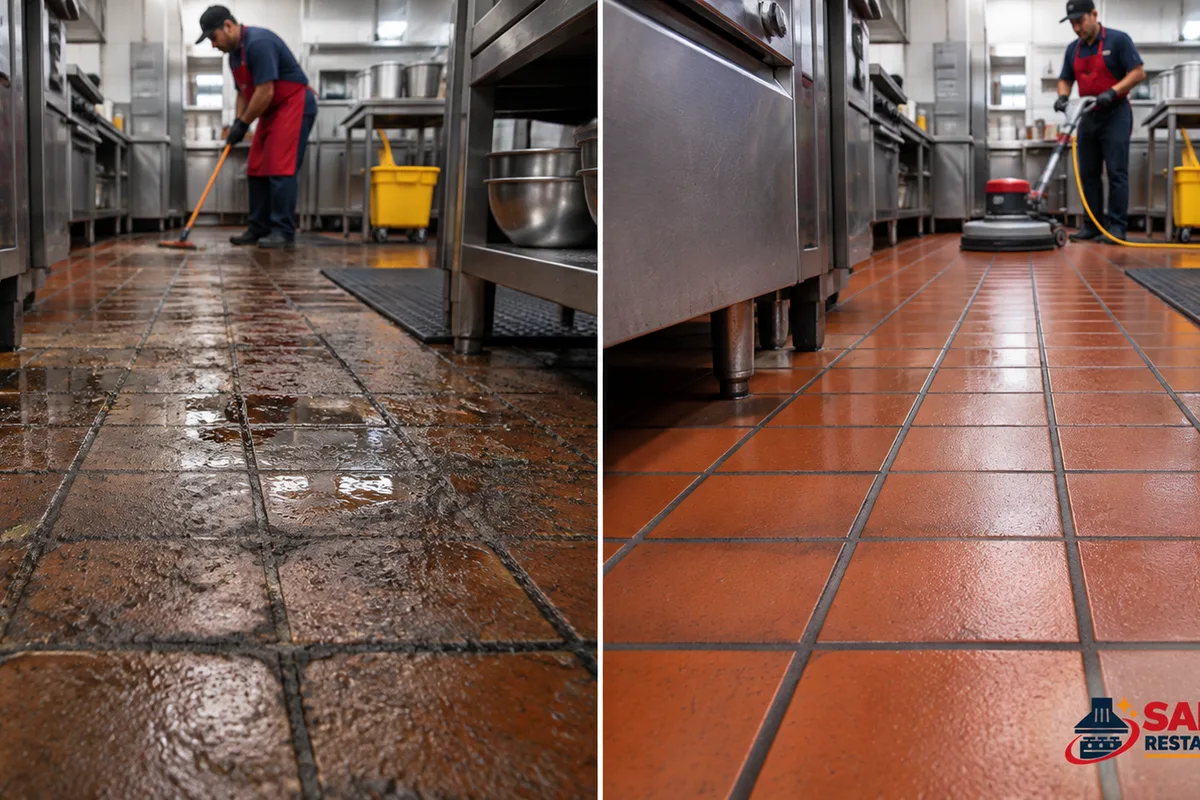
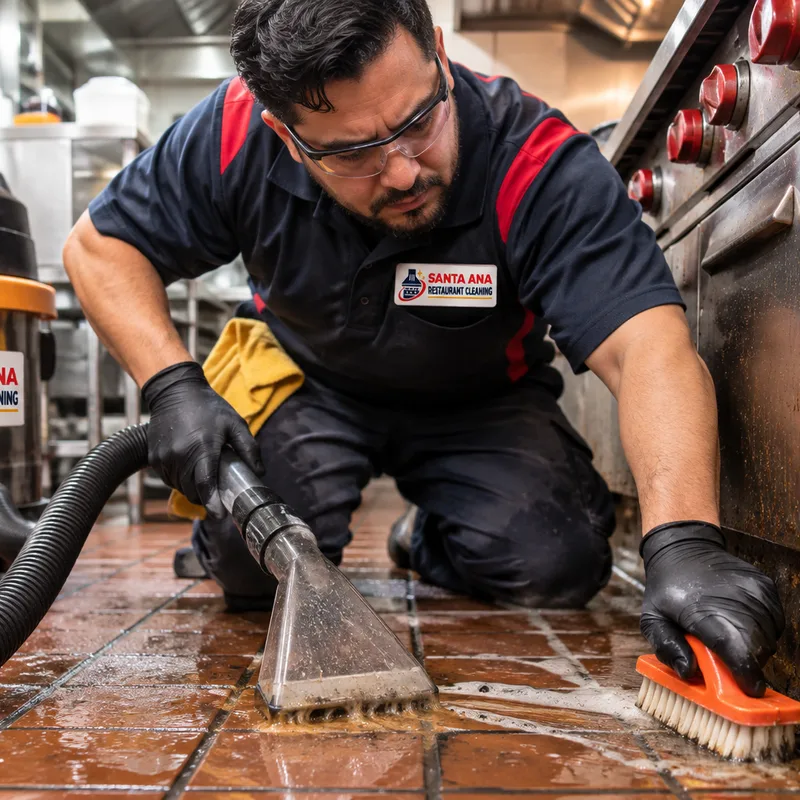
Tile can look acceptable after mopping while its grout remains dark and greasy. Grout joints are lower than the tile face and may be porous, so soil and cleaning residue collect in them. Effective Restaurant Grout Cleaning uses enough dwell time to soften greasy buildup, followed by mechanical agitation. A wet vacuum or controlled recovery process then removes the suspended soil instead of spreading it into adjacent joints.
Restaurant Tile Cleaning also requires attention to the perimeter. Grease commonly accumulates near fryers, cook lines, dish areas, thresholds, floor sinks, and wall-to-floor transitions. We work accessible edges and corners with detail tools, then rinse or extract according to the floor type and drainage setup. Floor drains are used only when appropriate, and wastewater handling must follow the facility's requirements. Cleaning does not repair cracked tile, missing grout, loose transitions, failed coatings, or drainage defects; those conditions are documented so they are not mistaken for removable soil.
Heavy discoloration may not disappear in one pass if grout is permanently stained, worn, or contaminated beneath a failed sealer. A test area helps distinguish bonded grease from material damage before the full scope is set.
Cook-Line Degreasing
Targeted Kitchen Floor Degreasing breaks down oily residue near fryers, ranges, grills, and other high-deposit zones. Chemistry, dwell time, and agitation are adjusted to the surface rather than applied at one strength throughout.
Tile and Grout Agitation
Rotary machines, deck brushes, grout brushes, or other suitable tools loosen compacted soil from textured tile and recessed joints. Detail work addresses edges that broad floor equipment cannot reach.
Soil and Rinse Recovery
Suspended grease must be removed from the floor. Wet recovery and controlled rinsing reduce the chance of dirty solution settling back into grout lines or being pushed under equipment.
Accessible Equipment Edges
The scope can include accessible floor around fixed cooking and preparation equipment. Any equipment movement must be agreed upon in advance and handled according to appliance, utility, and safety requirements.
Recurring Maintenance Plans
A scheduled Restaurant Floor Cleaning Santa Ana plan can focus on high-use zones more often while rotating lower-deposit areas. Frequency depends on menu, cooking volume, floor texture, and in-house maintenance.
After-Hours Coordination
Work can be planned around access and operating needs. The kitchen must be free of active food preparation, movable items should be cleared as agreed, and cleaned floors need protected drying time.
Our Commercial Kitchen Floor Cleaning Process
-
01
Inspect the Floor and Work Area
We identify the flooring material, coating or sealer condition, grout damage, grease concentration, access restrictions, floor drains, and nearby equipment. A test area may be used to confirm that the selected method is compatible with the surface.
-
02
Define the Scope and Timing
The written scope identifies included zones, exclusions, preparation responsibilities, equipment-access limits, and the operating window. Larger kitchens may be divided into phases to preserve safe access and allow adequate drying.
-
03
Dry Remove Loose Debris
Loose food particles and dry soil are removed before liquid chemistry is applied. This prevents debris from turning into slurry and gives the degreaser better contact with bonded residue.
-
04
Apply Degreaser and Allow Dwell Time
A compatible cleaning solution is applied without allowing it to dry on the floor. Dwell time gives the chemistry an opportunity to loosen grease, while heavy deposits may receive additional targeted treatment.
-
05
Agitate, Detail, and Recover
The floor and grout are mechanically scrubbed with suitable pads, brushes, or hand tools. Dirty solution is recovered, and the surface is rinsed or extracted as required so loosened grease is removed rather than redistributed.
-
06
Inspect and Release the Area
We review the cleaned zones, address reachable residue, and identify stains or damage that cleaning cannot correct. The floor remains out of service until it is dry enough for safe use and any facility precautions have been removed.
A Safer, More Useful Result Than Repeated Mopping
Repeated mopping with overloaded solution can move grease across a kitchen and leave detergent residue behind. Water that is too hot may also cause some greasy soils to spread before they are recovered. Professional Restaurant Floor Degreasing combines compatible chemistry with agitation and extraction, so loosened soil leaves the work area.
Slip resistance depends on the flooring's texture, wear, contamination, footwear, and whether the surface is wet. Cleaning can remove residues that make a floor slick, but it cannot restore an eroded texture or fix poor drainage. We avoid promising a specific coefficient of friction without appropriate testing. Restaurant management should continue using wet-floor controls, prompt spill response, and manufacturer-approved daily maintenance after service.
Santa Ana's year-round restaurant operations make recurring soil control more useful than waiting for a severe buildup. A kitchen that fries heavily may need more frequent attention around the cook line than a café with limited grease production. Our Commercial Floor Cleaning Santa Ana schedules are based on actual deposits and operating patterns, not a one-frequency plan for every facility.
How Much Does Commercial Kitchen Floor Cleaning Cost in Santa Ana?
Commercial kitchen floor cleaning in Santa Ana typically costs about $0.35 to $1.25 per square foot, while minimum service charges for smaller kitchens may run about $300 to $700. Heavy grease removal, detailed grout work, difficult equipment access, overnight scheduling, and multiple cleaning passes can raise the price.
Final pricing depends on floor area, material, soil level, drain access, preparation needs, and whether the work is one-time or recurring. An exact cost is confirmed after an inspection and agreement on the cleaning scope.
Preparing Your Kitchen for Service
Good preparation protects food, equipment, and cleaned areas. Stop food preparation in the work zone and remove exposed ingredients, utensils, mats, carts, and small movable items as agreed. Sweep up heavy loose debris if that responsibility is assigned to the restaurant. Staff should identify damaged outlets, loose tiles, broken grout, leaking equipment, and any area that must remain accessible during the cleaning window.
Do not mix cleaning products before the crew arrives. Acids, chlorine products, and alkaline degreasers can react dangerously or damage certain floors when combined. Safety data sheets and product labels govern dilution, handling, and personal protective equipment. If a kitchen has an epoxy coating, sealed concrete, vinyl composition tile, rubber flooring, or another specialty surface, provide any known manufacturer guidance before work begins.
After cleaning, keep staff and delivery traffic off the treated zones until released. Replace mats only after the floor and mat backing are dry. Daily care should use clean mop solution, correctly diluted product, frequent water changes, and separate tools for greasy back-of-house areas. These steps help prevent rapid redeposition between professional cleanings.
Commercial Kitchen Floor Cleaning Questions
How long does restaurant floor cleaning take? +−
A small, prepared kitchen may be completed in several hours, while a larger or heavily greased facility may require a full overnight window or phased visits. Floor area, equipment access, grout condition, rinse recovery, and drying time determine the schedule. Compact Downtown Santa Ana kitchens can take longer per square foot when hoses and floor machines must be routed through narrow work areas.
Can you clean the floor without moving restaurant equipment? +−
Yes, cleaning can be limited to accessible floor around fixed equipment, but hidden grease cannot be removed without safe access. Light, movable items can be handled as agreed in the scope. Fryers, ranges, refrigerators, and utility-connected appliances should not be moved unless the responsibility, shutdown procedure, and reconnection requirements are settled in advance.
Will Restaurant Floor Degreasing remove dark grout stains? +−
Degreasing removes bonded oil and soil, but it may not remove permanent discoloration, burned residue, worn grout, or staining beneath a failed sealer. A test area shows the likely result before broad treatment. Missing or cracked grout requires repair rather than stronger cleaning chemistry.
How often should a commercial kitchen floor be professionally cleaned? +−
The right frequency depends on cooking methods, service volume, floor texture, ventilation, and the quality of daily cleaning. A high-output fry line may need targeted degreasing more often than a bakery or beverage-focused operation. We assess the cook line, dish area, thresholds, and grout buildup to propose a schedule based on observed conditions.
Can you clean quarry tile, epoxy, and sealed concrete? +−
These surfaces can often be cleaned professionally, but they should not receive an identical process. Quarry tile may permit stronger agitation, while epoxy and sealed concrete require checks for coating wear and chemical compatibility. Santa Ana Restaurant Cleaning identifies the floor and tests uncertain surfaces before full treatment.
Can restaurant floor cleaning be scheduled after closing? +−
After-closing service can be planned when access, security, equipment shutdown, and drying time are agreed upon beforehand. The kitchen must remain free of food production during treatment. Restaurants near busy corridors such as Fourth Street should also reserve enough time before deliveries or opening traffic resume.
Does cleaning fix a slippery restaurant floor? +−
Cleaning can remove grease and detergent film that contribute to slipperiness, but it cannot repair worn texture, incorrect slope, damaged tile, or drainage problems. The final condition also depends on moisture and footwear. Wet-floor controls and immediate spill cleanup remain necessary after the cleaning is complete.
A floor inspection can separate removable grease from staining, coating wear, and grout damage, giving you a clear scope before work is scheduled.
Call for a Free QuotePlan a Cleaner Restaurant Kitchen Floor
Tell Santa Ana Restaurant Cleaning about the floor material, problem areas, kitchen size, and preferred service window. We will review access and buildup, then outline a practical cleaning scope for your operation.