
Commercial Kitchen Cleaning Services
Detailed cleaning for restaurant equipment, food-preparation areas, floors, and hard-to-reach buildup, scheduled around your operating hours.
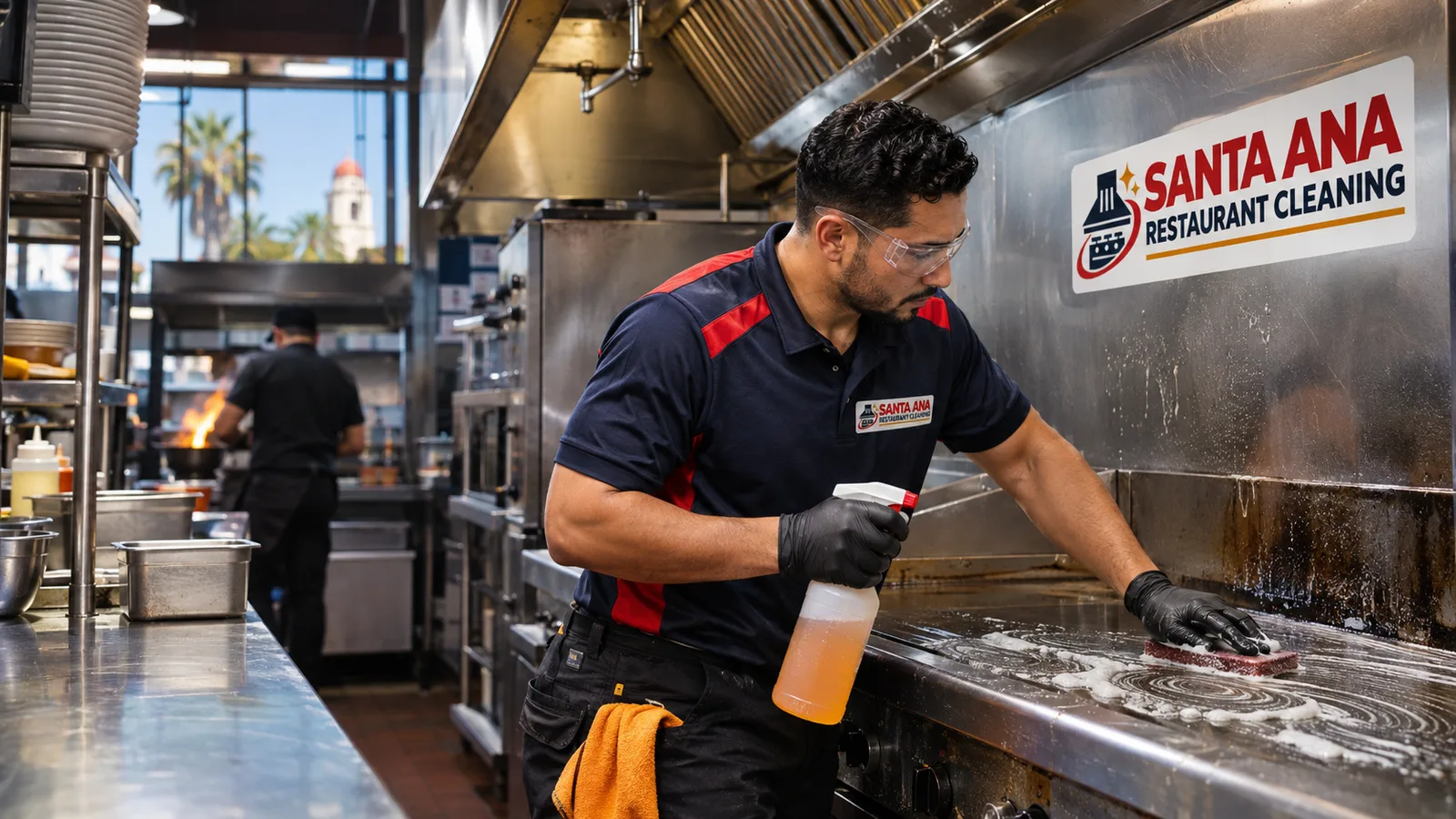
A Cleaner Kitchen Without Disrupting Service
Commercial Kitchen Cleaning Services address the grease, carbon, food residue, and soil that routine closing duties may leave behind. Santa Ana Restaurant Cleaning develops the scope around your equipment, kitchen layout, current condition, and operating schedule. The work may cover cooking lines, preparation areas, shelving, sinks, floors, walls, and accessible surfaces behind or beneath movable equipment.
As restaurant specialists serving Santa Ana, we plan the work around the practical demands of food-service operations. A compact kitchen near Downtown Santa Ana may have tight equipment clearances and limited staging room, while a larger operation near South Coast Metro may need the job divided into zones so cleaned areas remain organized. Restaurants serving the MainPlace area may also need cleaning timed around busy retail and dining periods. These conditions affect access, crew planning, and the time required to complete a thorough job.
Our goal is a clear, workable cleaning plan. Before service begins, we identify the target areas, discuss equipment access, and separate included cleaning from maintenance or repair work. This gives managers a defined scope they can review with their team.
What Professional Kitchen Cleaning Can Cover
A professional kitchen cleaning scope should match the way the kitchen is used. Cooking lines commonly need degreasing around ranges, fryers, griddles, ovens, salamanders, and adjacent stainless steel surfaces. Preparation zones may include worktables, sink exteriors, shelving, splash areas, and accessible wall surfaces. Floors often need focused attention along edges, beneath movable equipment, and around floor drains where residue collects.
Kitchen equipment cleaning is performed according to the material and the equipment manufacturer's care guidance. Stainless steel, painted surfaces, rubber components, and electrical controls cannot all be treated with the same product or amount of moisture. Cleaners should avoid spraying directly into electrical components, burner assemblies, control panels, and other sensitive openings. Equipment that must be disconnected, dismantled, or serviced by a qualified technician is identified before cleaning begins.
Commercial kitchen deep cleaning can also address grease films on accessible walls, shelving, doors, casters, equipment sides, and the spaces between appliances. Exhaust hood and duct cleaning may require a separate specialist and scope, especially where access to the exhaust system or fire-suppression components is involved.
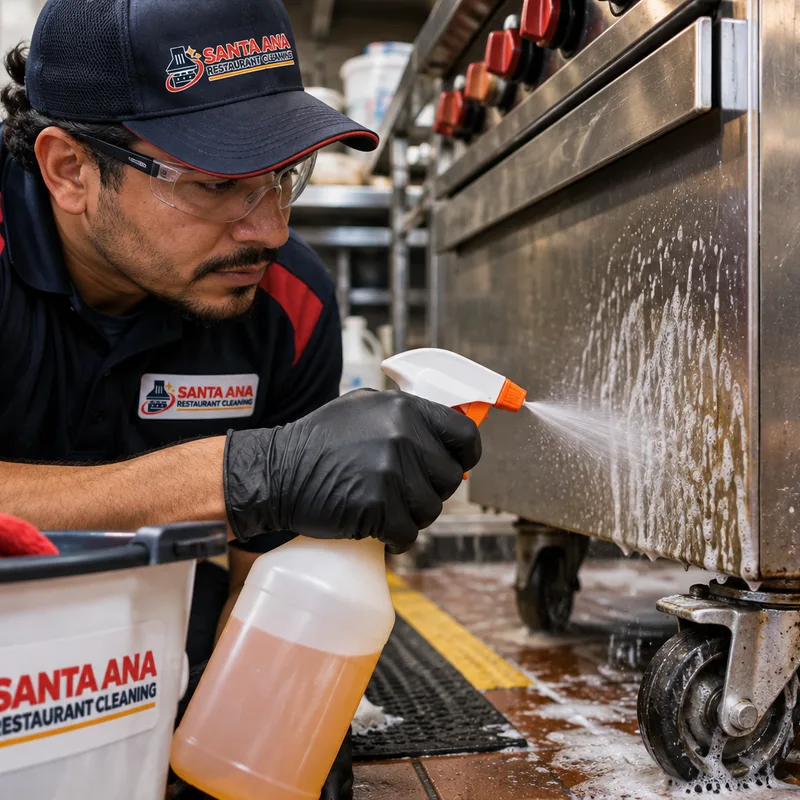
Cooking Line
Degreasing for accessible exteriors and surrounding surfaces near ranges, fryers, griddles, ovens, and hot-holding equipment. Heavy carbon deposits are assessed separately because they may require repeated treatment.
Preparation and Warewashing Areas
Cleaning for worktables, sink exteriors, shelving, splash zones, and other accessible non-food-contact surfaces. Food-contact surfaces require the correct cleaning, rinsing, and sanitizing procedure.
Floors, Edges, and Drains
Scrubbing and soil removal around floor edges, equipment legs, casters, and accessible drain areas. Slip risks, standing water, and damaged flooring are reported rather than covered up.
Walls and Vertical Surfaces
Removal of grease film and splash residue from suitable wall finishes, doors, backsplashes, and equipment sides without using overly aggressive methods on delicate materials.
Walk-In and Storage Areas
Cleaning for accessible shelving, walls, floors, and door surfaces after food and loose inventory are moved or protected. Refrigeration coils and mechanical components require separate handling.
Detail Work
Focused attention on handles, ledges, wheels, corners, seams, and gaps that ordinary nightly cleaning may miss. Access depends on whether equipment can be moved safely.
How Our Commercial Kitchen Deep Cleaning Process Works
-
01
Walk Through the Kitchen
We review the layout, equipment, surface materials, buildup, access limitations, and areas of concern. Managers can identify priorities such as a cooking line, preparation room, walk-in, or floor perimeter.
-
02
Set the Scope and Schedule
The written scope identifies included areas, exclusions, access needs, and timing. Scheduling may take place after closing or during another planned shutdown period, depending on the amount of work and the kitchen's operating hours.
-
03
Prepare and Protect
Food, utensils, disposables, and loose items must be removed or protected. Equipment is shut down and cooled where required, and cleaners review sensitive controls, pilot assemblies, electrical connections, and surfaces that should not be saturated.
-
04
Degrease, Agitate, and Rinse
Appropriate products are given the needed dwell time, then soil is loosened with pads, brushes, scrapers, or mechanical floor equipment suited to the surface. Residue is removed without mixing incompatible chemicals.
-
05
Inspect the Completed Work
The cleaned areas are reviewed against the agreed scope. Managers are informed about inaccessible buildup, damaged finishes, loose components, leaks, or maintenance concerns noticed during the job.
Cleaning Methods That Respect Food-Service Equipment
Effective grease removal depends on chemistry, dwell time, agitation, temperature, and safe access. Stronger chemicals are not automatically better. An alkaline degreaser may be appropriate for heavy grease on a compatible surface, while stainless steel may need a less aggressive product and non-scratching tools to protect its finish. Product labels and safety data sheets govern dilution, required personal protective equipment, ventilation, and contact time.
Cleaning and sanitizing are separate steps. Cleaning removes soil and grease. Sanitizing is performed after proper cleaning on applicable food-contact surfaces, using a product approved for that use and at the labeled concentration. Chemicals should never be mixed, and food-contact surfaces may require rinsing according to the product label.
Professional kitchen cleaning also depends on containment. Splash, loosened debris, and wastewater must be controlled so they do not spread into stored food, dining areas, electrical components, or neighboring work zones. In California's warm climate, greasy residue can attract pests and develop odors quickly, which makes consistent cleaning schedules especially useful for active kitchens.
How Much Do Commercial Kitchen Cleaning Services Cost in Santa Ana?
Commercial kitchen cleaning in Santa Ana typically costs about $500 to $1,500 for a smaller scheduled deep clean, while large kitchens or heavy grease restoration may run $1,500 to $4,000 or more. These are general, non-binding ranges rather than a quote.
Final pricing depends on kitchen size, buildup, equipment count, cleaning frequency, overnight access, movable equipment, and whether walls, floors, walk-ins, or specialty systems are included. The exact cost is confirmed after a walkthrough and written scope.
Choosing a Kitchen Cleaning Company
Ask what the quoted scope includes and whether the crew has experience with commercial food-service environments. A useful proposal should identify the equipment and areas to be cleaned, the expected access, any exclusions, and how long the kitchen needs to remain unavailable. It should also explain who moves heavy equipment and how sensitive components will be protected.
A responsible kitchen cleaning company should use products according to their labels, keep safety data sheets available, and avoid unsupported claims about inspection outcomes. Cleaning can support a facility's sanitation program, but it does not replace employee procedures, pest control, equipment maintenance, or regulatory compliance. Restaurants in Santa Ana fall under Orange County's environmental health oversight, so operators should maintain their own required cleaning practices and records.
Frequency depends on cooking volume, menu, ventilation performance, staffing, and the amount of grease produced. A high-output fryer line may need focused degreasing more often than a low-grease preparation area. Some businesses schedule recurring professional kitchen cleaning, while others arrange service before reopening, after equipment changes, or when routine work no longer controls buildup.
A walkthrough can turn a general cleaning request into a written scope based on your equipment, buildup, access, and operating schedule.
Call for a Free QuoteQuestions About Restaurant Kitchen Cleaning in Santa Ana
Can restaurant kitchen cleaners in Santa Ana work after closing? +−
After-hours cleaning can usually be arranged when the scope, building access, and kitchen shutdown period allow it. The crew needs enough time for equipment to cool, products to dwell, surfaces to be rinsed where required, and floors to dry before staff return. Kitchens near Downtown Santa Ana with limited loading or parking access may require additional arrival and staging planning.
How long does commercial kitchen deep cleaning take? +−
A focused job may take several hours, while a large kitchen or heavy grease cleanup may require a full shift or more. Equipment density, buildup, floor condition, access behind appliances, and the number of areas included determine the duration. The expected working window is established during the walkthrough.
Do we need to remove food and supplies before kitchen cleaning? +−
Food, utensils, disposables, and loose supplies generally need to be removed from the work zone or fully protected before cleaning starts. Staff should also empty designated shelves, secure chemicals, and identify equipment that cannot be moved. These preparations reduce contamination risks and give the crew access to the agreed surfaces.
Does kitchen equipment cleaning include dismantling appliances? +−
Routine cleaning generally covers accessible equipment surfaces and removable parts identified in the scope, not technical dismantling or repair. Gas connections, hardwired electrical components, refrigeration systems, fire-suppression equipment, and manufacturer-restricted assemblies may require qualified service technicians. The walkthrough establishes what can be moved or removed safely.
Are exhaust hoods and ducts included in restaurant kitchen cleaning? +−
Exhaust hoods, filters, fans, and ductwork should be listed separately because this work may require specialized access, documentation, and coordination with the fire-suppression system. General cleaning around a hood is different from cleaning the complete grease-exhaust system. The written scope should state clearly whether any exhaust components are included.
How often should a commercial kitchen schedule professional cleaning? +−
The right frequency depends on grease production, operating hours, menu, equipment arrangement, and the effectiveness of daily staff cleaning. High-volume fryers and grills often need more frequent attention than dry storage or low-grease preparation areas. A walkthrough can establish recurring priorities without treating every part of the kitchen on the same cycle.
Can cleaning guarantee that a restaurant will pass an inspection? +−
No cleaning company can guarantee the result of a regulatory inspection. Professional cleaning can address the areas in its written scope, but inspection outcomes may also depend on food temperatures, employee practices, pest activity, equipment condition, plumbing, and records. Orange County environmental health requirements remain the operator's responsibility.
Plan a Cleaner, More Manageable Kitchen
Tell Santa Ana Restaurant Cleaning about your equipment, problem areas, and preferred service window. We will help define a practical scope before work begins.