
Overnight Restaurant Cleaning in Santa Ana
Walk into a clean kitchen, orderly dining room, and refreshed restrooms each morning with a recurring cleaning plan built around your closing and opening times.
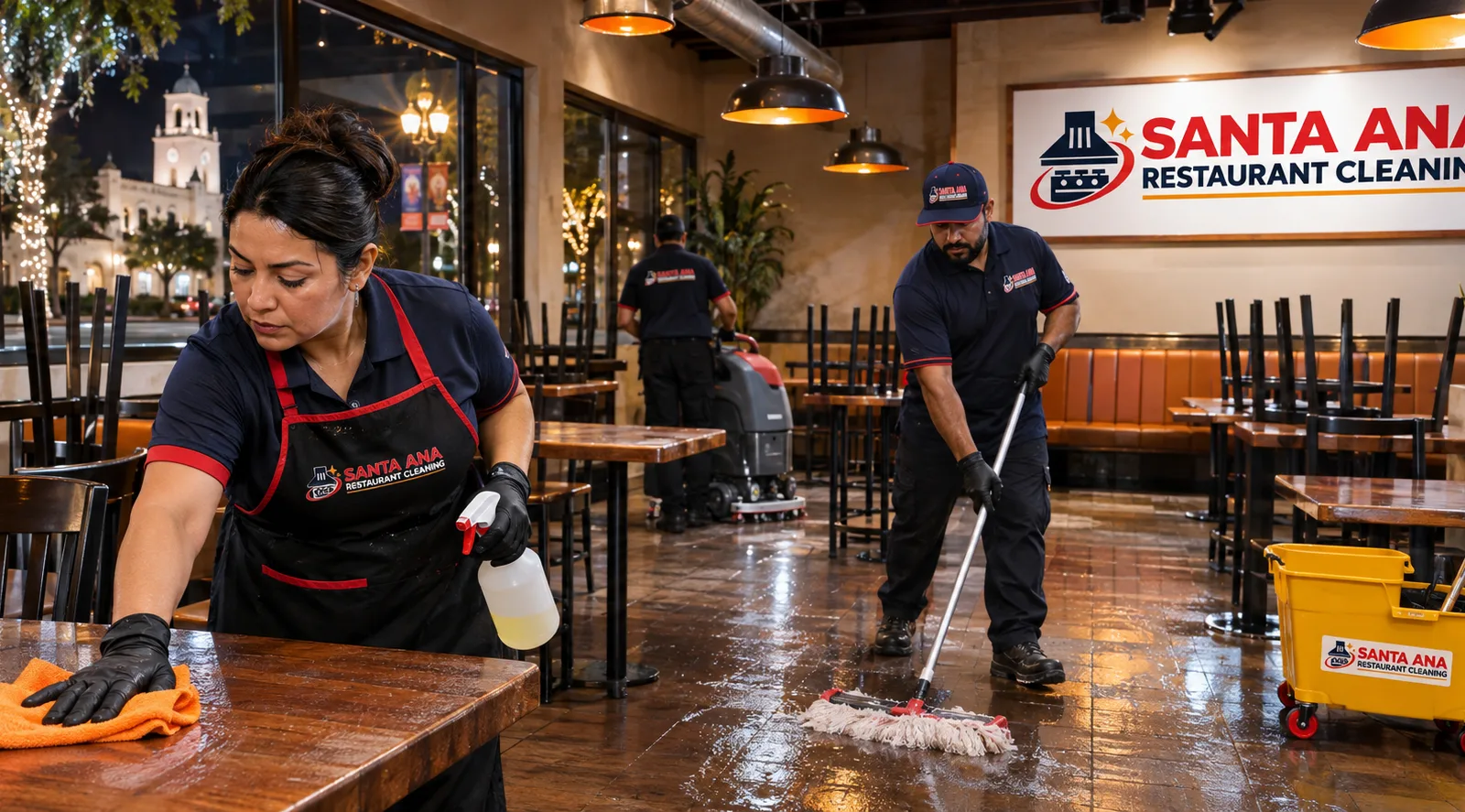
A Cleaner Restaurant Before the First Guest Arrives
Overnight Restaurant Cleaning gives your staff a clean, orderly workplace without interrupting service. Once the dining room closes and food handling has ended, the crew follows a written scope for the kitchen, front of house, restrooms, employee areas, and entry. The goal is straightforward: complete the agreed work before your opening team arrives.
Santa Ana restaurants operate in many different settings. Downtown dining rooms may need close coordination around late closing times and compact service areas. Restaurants near South Coast Metro can experience heavy evening traffic and frequent restroom use. Establishments around the MainPlace area may need cleaning timed around shopping and entertainment hours. In each case, the cleaning schedule should match the actual flow of the restaurant rather than force every location into the same checklist.
Santa Ana Restaurant Cleaning builds recurring service around your operating hours, floor materials, equipment layout, and nightly priorities. Our role as Santa Ana's trusted restaurant team is to document the work, establish access instructions, and focus on repeatable results that managers can inspect at opening.
What Overnight Restaurant Cleaning Covers
A complete scope separates food-contact surfaces from general janitorial work and identifies what the restaurant's employees handle before the crew begins. Cleaning commonly starts after food is stored, equipment is shut down as required, and loose waste is removed from active preparation areas.
In the kitchen, restaurant janitorial cleaning may include degreasing accessible exterior surfaces, wiping equipment fronts, cleaning splash areas, scrubbing sinks, emptying waste receptacles, and mopping floors with attention to edges and areas beneath movable items. Products and tools should be selected for the surface and task. Color-coded microfiber cloths and dedicated restroom tools help limit cross-contamination between work zones.
Front-of-house work can cover tables, chairs, booths, host stations, ledges, glass at entry doors, and hard floors. Carpeted areas may be vacuumed as part of nightly service, while periodic extraction is scheduled separately when needed. Restaurant Restroom Cleaning typically includes toilets, urinals, sinks, mirrors, dispensers, partitions, touchpoints, waste removal, and floor cleaning. Consumable restocking can be included when the restaurant supplies the paper goods, soap, and liners.
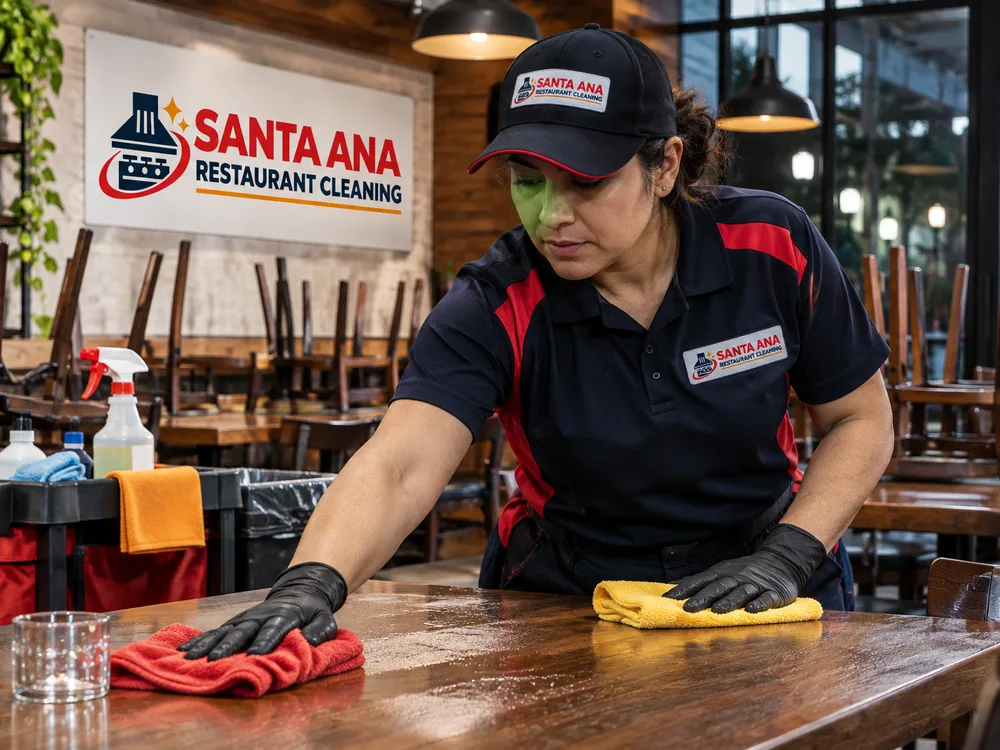
Dedicated tools and a written scope keep kitchen, dining, and restroom tasks organized.
Kitchen and Back of House
Scheduled tasks can include accessible equipment exteriors, prep-area splash surfaces, sinks, waste stations, floor edges, and washable hard floors. Heavy buildup, hood systems, and equipment interiors require separate scope approval.
Dining Room and Bar
Crews address tables, chair contact points, booths, counters, ledges, entry glass, and floors after guests leave. The checklist can account for fixed seating and delicate finishes.
Restaurant Restrooms
Fixtures, mirrors, partitions, dispensers, touchpoints, receptacles, and floors receive consistent attention. Dedicated tools remain separate from kitchen and dining-area supplies.
Entries and Staff Areas
Entry doors, interior mats, break areas, employee restrooms, and designated waste points can be added when they are part of the contracted nightly scope.
How Recurring Restaurant Cleaning Is Set Up
-
01
Walk Through the Restaurant
We review the layout, closing routine, surface types, access conditions, waste procedures, and areas that need nightly or periodic attention. Managers can identify recurring trouble spots during this visit.
-
02
Define Responsibilities
The written scope states what the cleaning crew handles and what restaurant employees complete first. It also distinguishes routine janitorial tasks from specialized work such as commercial kitchen exhaust cleaning.
-
03
Set the Night Schedule
Service is placed after the restaurant's closing tasks and before opening preparation begins. Access, alarm, key control, and lockup instructions are documented for the assigned crew.
-
04
Clean in a Consistent Order
The team follows the location's checklist, generally completing higher surfaces before floors and keeping restroom equipment separate from food-service areas.
-
05
Inspect and Adjust
Managers report missed details, changing priorities, or schedule changes through an established communication process. The scope can be revised as menus, seating, hours, or traffic patterns change.
Restaurant Night Cleaning Built Around Your Hours
A useful night schedule leaves enough time for both the restaurant's closing team and the cleaning crew. Starting too early can put cleaners in the path of staff who are still breaking down stations. Starting too late can interfere with deliveries, prep work, or the opening shift. We confirm the workable service window before recurring cleaning begins.
Daily Restaurant Cleaning is a good fit for locations with steady service, frequent restroom use, greasy kitchen floors, or high turnover in dining areas. Other restaurants may need service on selected nights, with periodic detail cleaning added to the calendar. A restaurant janitorial company should make the frequency explicit, including which tasks happen every visit and which occur weekly or on another agreed rotation.
Santa Ana's year-round restaurant activity can bring tracked-in dust, food debris, drink spills, and oils into customer and production areas on any night. Hard floors need the correct chemical, dilution, dwell time, and agitation method for their material and condition. Entry mats also require regular attention because saturated or dirty matting can transfer soil back onto a freshly cleaned floor.
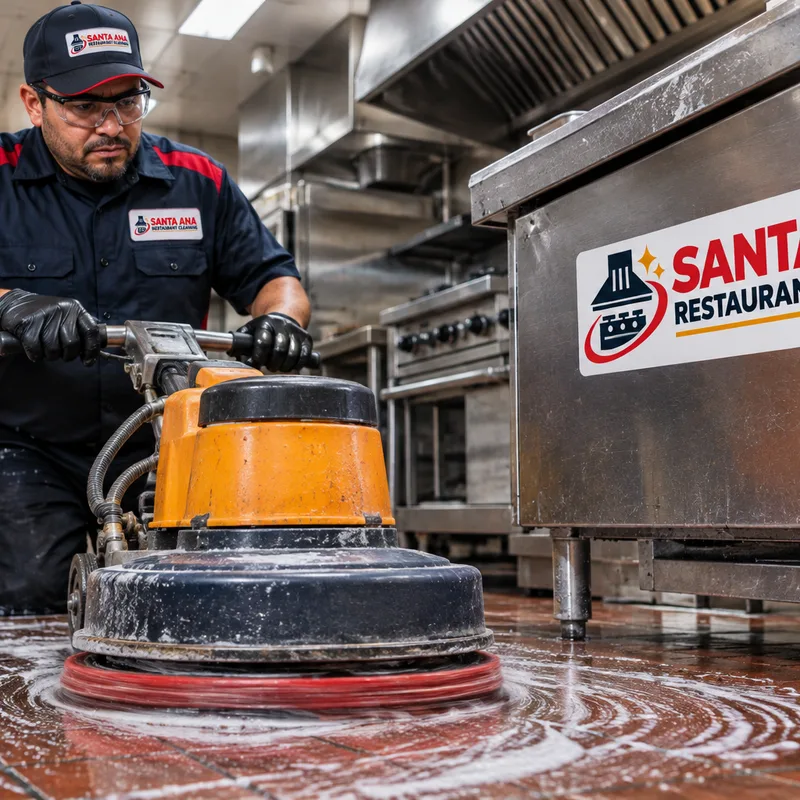
Floor procedures are matched to the surface, soil level, and approved cleaning product.
Clear Boundaries for Kitchen Cleaning
Routine Restaurant Night Cleaning is different from specialized commercial kitchen exhaust service. Nightly crews can clean accessible surfaces identified in the agreement, but hood interiors, ducts, fans, rooftop discharge components, grease traps, pest treatment, and internal equipment service are separate disciplines. These items should never be implied by a general janitorial checklist.
Food-contact areas also need clear handoff rules. Restaurant employees may need to remove or protect food, disassemble approved equipment components, and complete required wash-rinse-sanitize procedures under the restaurant's food-safety plan. The janitorial scope should state which surfaces the overnight crew cleans and whether any sanitizing step is included. Cleaning removes soil. Sanitizing uses an approved product at its labeled concentration and contact time after the surface has been cleaned.
Santa Ana food facilities fall under Orange County's environmental health oversight. A janitorial company does not replace the operator's responsibility to follow applicable food-safety requirements, maintain equipment, or prepare for inspections. Reliable service supports those responsibilities with documented tasks, appropriate product use, and consistent nightly execution.
A Location-Specific Checklist
The scope should name the rooms, surfaces, tasks, and frequencies included. Broad promises make opening inspections harder and leave responsibility unclear.
Cross-Contamination Controls
Restroom tools should remain separate from kitchen and dining tools. Chemical containers need labels, and crews should follow manufacturer directions for dilution and contact time.
Secure After-Hours Procedures
Access instructions should address keys or codes, alarms, restricted areas, lights, final lockup, and the person to contact when conditions differ from the normal routine.
A Reliable Communication Process
Managers need a direct way to report a missed task, a spill that needs extra attention, or a temporary schedule change before the next visit.
Get a written cleaning scope that matches your closing routine, opening deadline, floor materials, and priorities for each restaurant zone.
Call for a Free QuoteQuestions About Nightly Restaurant Cleaning in Santa Ana
How is Overnight Restaurant Cleaning priced? +−
Pricing is usually based on labor time, cleaning frequency, square footage, number of restrooms, kitchen soil levels, floor types, access, and the length of the overnight service window. A compact counter-service restaurant and a full-service dining room with a bar and multiple restrooms require different scopes. A walkthrough at the Santa Ana location is the best way to establish a written, location-specific price.
Can cleaning begin immediately after our restaurant closes? +−
Yes, cleaning can begin after guests leave and the restaurant completes the closing tasks required for safe access. The exact start time should account for food storage, equipment shutdown, cash-out procedures, staff departure, and alarms. Downtown Santa Ana locations with later activity may need a different arrival plan than restaurants that close earlier.
Do you offer Daily Restaurant Cleaning? +−
Yes, recurring service can be arranged for daily or selected-night schedules based on the restaurant's operating week. The agreement should identify every service night and separate nightly tasks from weekly or periodic work. This makes it easier for an opening manager to inspect the same priorities each morning.
What is included in Restaurant Restroom Cleaning? +−
Restaurant restroom service can include toilets, urinals, sinks, faucets, counters, mirrors, partitions, dispensers, touchpoints, waste receptacles, and floors. Restocking may be added when supplies are available at the location. Restroom cloths, brushes, and mop equipment should be kept separate from tools used in kitchens and dining rooms.
Does nightly janitorial service include hood and duct cleaning? +−
No, commercial exhaust hood, duct, fan, and rooftop component cleaning is specialized work and should not be assumed to be part of ordinary janitorial service. Routine crews may clean accessible exterior surfaces if they are listed in the agreement. Internal exhaust-system cleaning requires its own qualified provider, schedule, and documentation.
Can the crew clean while kitchen employees are still working? +−
Limited work may be possible in cleared areas, but the main cleaning window should begin after active food preparation and closing duties are complete. Separating the work reduces interference and helps prevent cleaned surfaces from being soiled again. The walkthrough identifies which rooms can be released first and which must wait.
Who provides cleaning products and restroom supplies? +−
Product and supply responsibilities are confirmed in the service agreement before work starts. The restaurant may provide paper goods, hand soap, liners, or approved chemicals, while the janitorial company may bring routine tools and cleaning products. Any product used on a surface must be suitable for that material and applied according to its label.
How quickly can recurring service start? +−
The start date depends on the walkthrough, approved scope, service frequency, access setup, and crew scheduling. A straightforward restaurant can often be prepared faster than a location that needs detailed security coordination or extensive initial cleaning. The first service date is confirmed after expectations and site procedures are documented.
Set Up a Reliable Overnight Cleaning Plan
Tell Santa Ana Restaurant Cleaning about your hours, restaurant layout, current trouble spots, and preferred service frequency. We will outline the work needed to leave the kitchen, dining areas, restrooms, and entries ready for the next shift.