
Restaurant Cleaning Company
Detailed cleaning for kitchens, coolers, dining areas, and hard-to-reach surfaces, planned around your operating schedule.
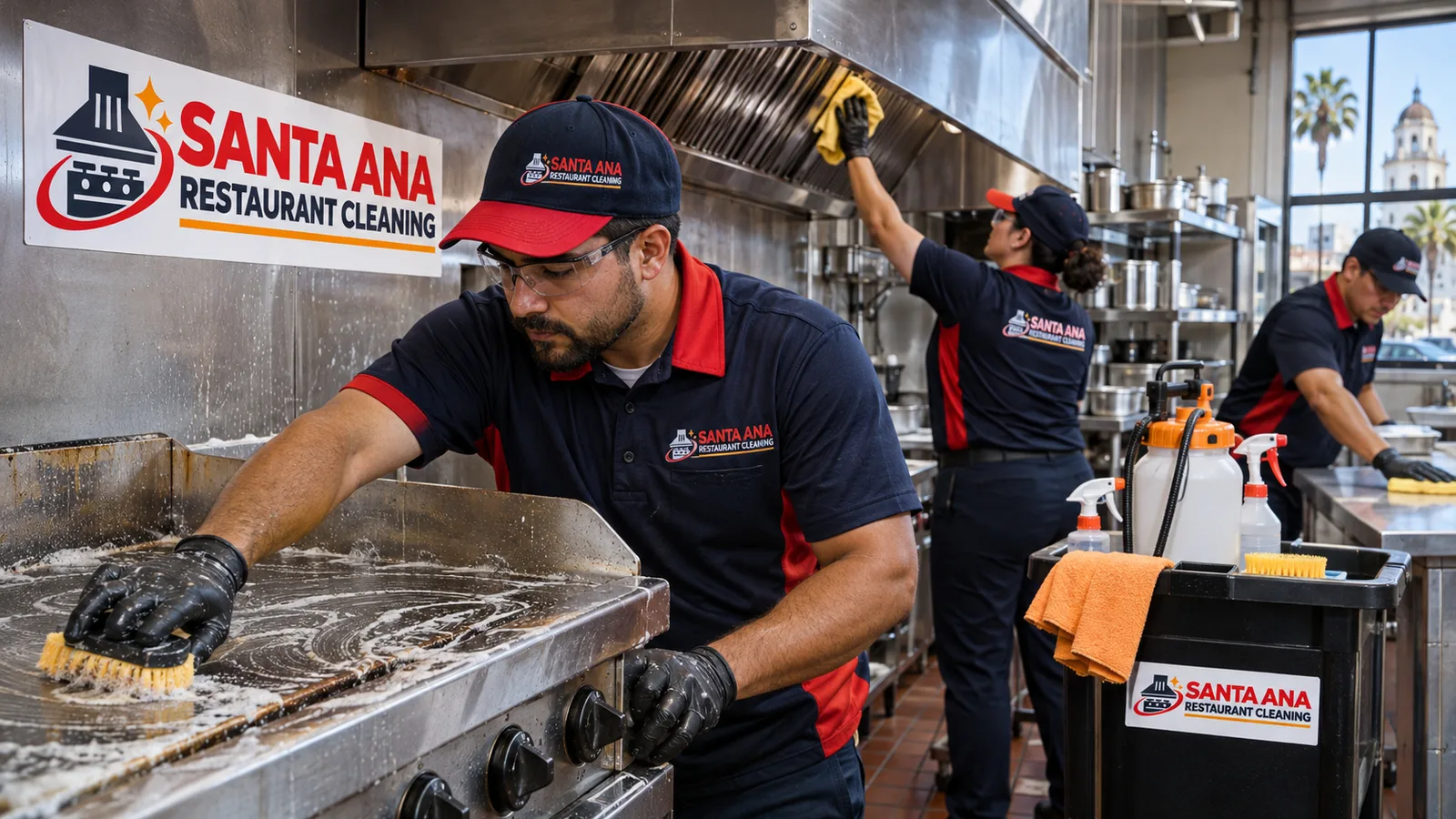
Professional Restaurant Deep Cleaning in Santa Ana
Santa Ana Restaurant Cleaning handles the intensive work that routine opening and closing duties may not cover. As a local Restaurant Cleaning Company, we build the scope around the equipment, surfaces, access limits, and operating schedule at each property. The work can include commercial kitchens, walk-in coolers, dining rooms, storage areas, restrooms, and overhead surfaces.
Our crew starts by identifying what needs attention and what must remain untouched. Equipment type, grease accumulation, food-contact surfaces, floor condition, ceiling height, and access behind fixed units all affect the plan. We are an experienced restaurant team in Santa Ana that can schedule detailed work around prep periods, service hours, and approved access windows. The written scope sets out the cleaning areas and priorities before work begins.
Downtown Santa Ana restaurants may have compact kitchens, shared service access, or limited staging space. Properties near South Coast Metro can include larger dining rooms and higher ceilings that require more time for overhead work. Along Main Street, varied building layouts make a walk-through useful before equipment is moved or cleaning methods are selected. These practical differences matter more than a generic checklist.
Restaurant Deep Cleaning Services
Kitchen Deep Cleaning
Degreasing and detailed cleaning can cover cooking-line exteriors, prep surfaces, backsplashes, walls, floors, drains, shelving, and accessible spaces behind or beneath equipment. Food-contact surfaces receive methods and products appropriate for their intended use.
Walk-In Cooler Cleaning
Walk In Cooler Cleaning addresses racks, walls, floors, doors, handles, gaskets, and accessible fan guards after food is removed or protected. The scope accounts for condensation, spills, labels, and debris without disrupting refrigeration controls.
High Dusting
High Dusting in Santa Ana restaurants may cover exposed pipes, ducts, ledges, light housings, ceiling vents, and other reachable overhead surfaces. Crews isolate the work area and control falling dust before lower surfaces receive final cleaning.
Dining and Guest Areas
Restaurant Detailed Cleaning can include tables, chairs, booths, baseboards, partitions, window interiors, fixtures, and restroom surfaces. Material-sensitive methods are used on upholstery, wood finishes, glass, and decorative elements.
Floors and Edges
Detailed floor work targets corners, edges, under-equipment areas, and buildup around transitions. The method depends on whether the surface is quarry tile, sealed concrete, resilient flooring, or another commercial material.
Storage and Support Areas
Dry storage, dish areas, employee spaces, and service corridors can be included when they are listed in the scope. Items may need to be removed, consolidated, or protected before cleaning begins.
Commercial Kitchen Deep Cleaning Santa Ana Operators Can Schedule Around Service
A kitchen deep clean should follow an organized sequence. Loose soil and dry debris are removed first. Degreaser is given suitable dwell time on compatible surfaces, then the area is agitated, rinsed or wiped as appropriate, and dried. Cleaning and sanitizing are separate steps: cleaning removes soil, while an approved sanitizer is applied at the label concentration and contact time when sanitizing is part of the scope.
The crew must also account for equipment and surface limitations. Electrical components, pilot lights, control panels, bearings, and exposed connections cannot be treated like washable walls or floors. Aluminum and certain finished surfaces may react poorly to highly alkaline chemicals. A professional restaurant deep cleaning plan matches the product and method to the substrate rather than applying one chemical throughout the kitchen.
Commercial kitchen cleaning does not replace specialized exhaust-system service, pest control, equipment repair, or grease-interceptor pumping. If inaccessible internal ductwork, active pests, damaged refrigeration components, or plumbing problems are found, those conditions should be handled by the appropriate specialist.
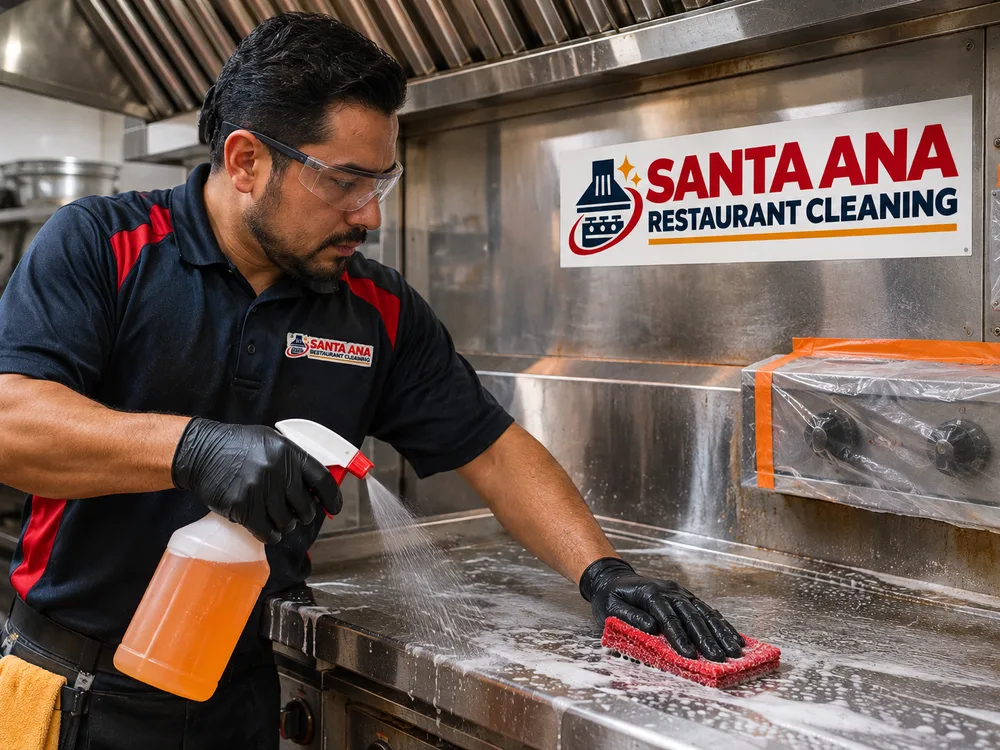
Methods are selected for the soil, surface, and equipment limitations.
How Our Restaurant Deep Cleaners Plan the Work
-
01
Walk Through the Property
We review the kitchen, cooler, dining room, storage areas, restrooms, and overhead surfaces included in the request. The walk-through identifies access restrictions, delicate finishes, movable equipment, utilities, and areas with heavier buildup.
-
02
Confirm a Written Scope
The plan lists included areas, exclusions, site preparation, scheduling needs, and priority items. It also clarifies whether the restaurant team or cleaning crew will move small items, racks, and accessible equipment.
-
03
Prepare and Protect
Food, utensils, disposables, and sensitive equipment are removed or protected as agreed. Warning signs, floor protection, and work-zone controls are set before chemicals or tools are brought into active areas.
-
04
Clean in a Controlled Sequence
Crews generally work from high surfaces toward low surfaces and from less soiled zones toward heavier buildup where practical. This reduces the chance of recontaminating finished areas.
-
05
Inspect the Defined Areas
A final review checks the work against the written scope. Any access limitation, damaged surface, or maintenance concern observed during cleaning is documented for the operator.
How Much Does Restaurant Deep Cleaning Cost in Santa Ana?
Restaurant deep cleaning in Santa Ana typically ranges from $500 to $2,500 or more. A compact kitchen with moderate buildup may fall near the lower end, while a large restaurant, heavy grease accumulation, walk-in cooler work, or extensive high dusting can raise the price.
Final cost depends on square footage, soil level, equipment density, ceiling height, access, surface materials, crew size, and whether work must occur overnight. Moving equipment and preparing food-storage areas also affect labor. The exact cost is confirmed after a walk-through and written scope.
Walk-In Cooler Cleaning Requires Careful Preparation
A walk-in cooler should be cleaned without blocking airflow, soaking electrical parts, or leaving chemical residue near stored food. Before work starts, the operator and cleaning crew should agree on product removal, temporary storage, shelf access, and temperature-sensitive timing. Refrigeration equipment must stay within the operating procedures set by its manufacturer and the restaurant.
Removable racks and shelves can be cleaned separately when the material and available wash area allow it. Walls, doors, handles, gaskets, and floors are treated according to their material. Drain openings and floor transitions receive close attention because debris can collect at edges. Fan guards may be cleaned when they are safely accessible, but internal mechanical service belongs with a refrigeration technician.
Santa Ana food facilities operate under Orange County Environmental Health oversight. A deep clean can support an establishment's sanitation program, but the operator remains responsible for food protection, approved sanitizer use, temperature control, and compliance with applicable requirements.
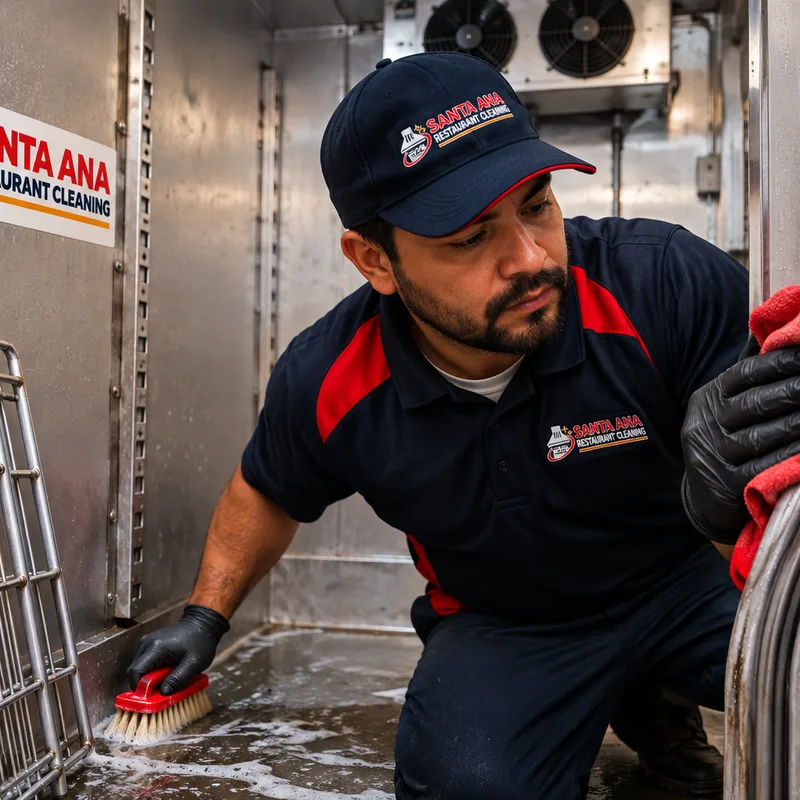
Food removal, airflow, electrical protection, and cold-storage timing are addressed before cooler work starts.
Why Detailed Cleaning Needs a Site-Specific Scope
Two restaurants of similar size can require very different labor. An open kitchen has visible surfaces that may need careful finish work, while a high-volume cook line may have heavier grease behind equipment. A dining room with upholstered booths needs a different method than one with sealed hard seating. Ceiling height, freight access, parking restrictions, and the distance between the work area and water source can also change crew setup.
Southern California's dry periods can contribute to outdoor dust entering through doors, loading areas, and ventilation openings. Overhead ledges and exposed building elements can collect that dust beyond the reach of routine floor-level cleaning. High dusting should occur before detailed cleaning of counters, tables, equipment exteriors, and floors so settled material is removed during the final pass.
A useful proposal identifies specific areas instead of promising an undefined total clean. Ask whether the quote includes equipment exteriors, spaces beneath movable units, walls, vents, cooler shelving, floor drains, and waste handling. Confirm who protects food and smallwares, what access the crew needs, and how completion will be reviewed.
Schedule a walk-through to define the cleaning areas, access requirements, timing, and preparation responsibilities before the work begins.
Call for a Free QuoteRestaurant Cleaning Questions
How long does restaurant deep cleaning in Santa Ana take? +−
A focused deep clean may take several hours, while a large kitchen and dining area can require a full shift or more. Equipment density, buildup, ceiling height, cooler preparation, and access all affect duration. For Downtown Santa Ana properties with compact service access, staging and equipment movement should be planned before the crew arrives.
Can kitchen deep cleaning be completed overnight? +−
Yes, overnight work may be scheduled when access, staffing, and the agreed scope allow it. The restaurant should leave enough time for surfaces to dry, equipment to be safely returned, and food areas to be reset before preparation begins. Work near occupied residential properties may also require attention to noise and loading practices.
Do we need to remove food before walk-in cooler cleaning? +−
Food generally needs to be removed, relocated, or securely protected according to the agreed plan before interior cooler cleaning starts. The operator is responsible for maintaining safe product temperatures during relocation. Shelving access and refrigeration operating requirements should be confirmed during the walk-through.
Does commercial kitchen deep cleaning include the exhaust hood and ductwork? +−
Accessible exterior hood surfaces may be included, but internal hood, fan, and duct cleaning is a separate specialized service unless explicitly stated in the written scope. Restaurant operators should confirm the limits before scheduling. Cleaning around cooking equipment also does not replace fire-system inspection or equipment maintenance.
Can you clean while the restaurant is open? +−
Some low-impact work may be possible in closed-off areas, but intensive degreasing, high dusting, and wet floor work are usually better scheduled outside food preparation and guest service. The plan should separate employees, customers, exposed food, and clean utensils from the work zone.
How should I compare Restaurant Cleaning Company quotes? +−
Compare the listed areas, preparation duties, exclusions, access assumptions, and completion review rather than price alone. A useful Santa Ana quote states whether high surfaces, cooler interiors, floor edges, equipment movement, and waste removal are included. It should also identify conditions that could change the price after inspection.
Plan Your Restaurant Deep Cleaning
Tell Santa Ana Restaurant Cleaning which areas need attention and when your property is available. We will define the scope, preparation requirements, and scheduling plan before work starts.