
Restaurant Cleaning Orange
Detailed kitchen, dining room, and restroom cleaning planned around your operating hours, food-safety procedures, and daily traffic.
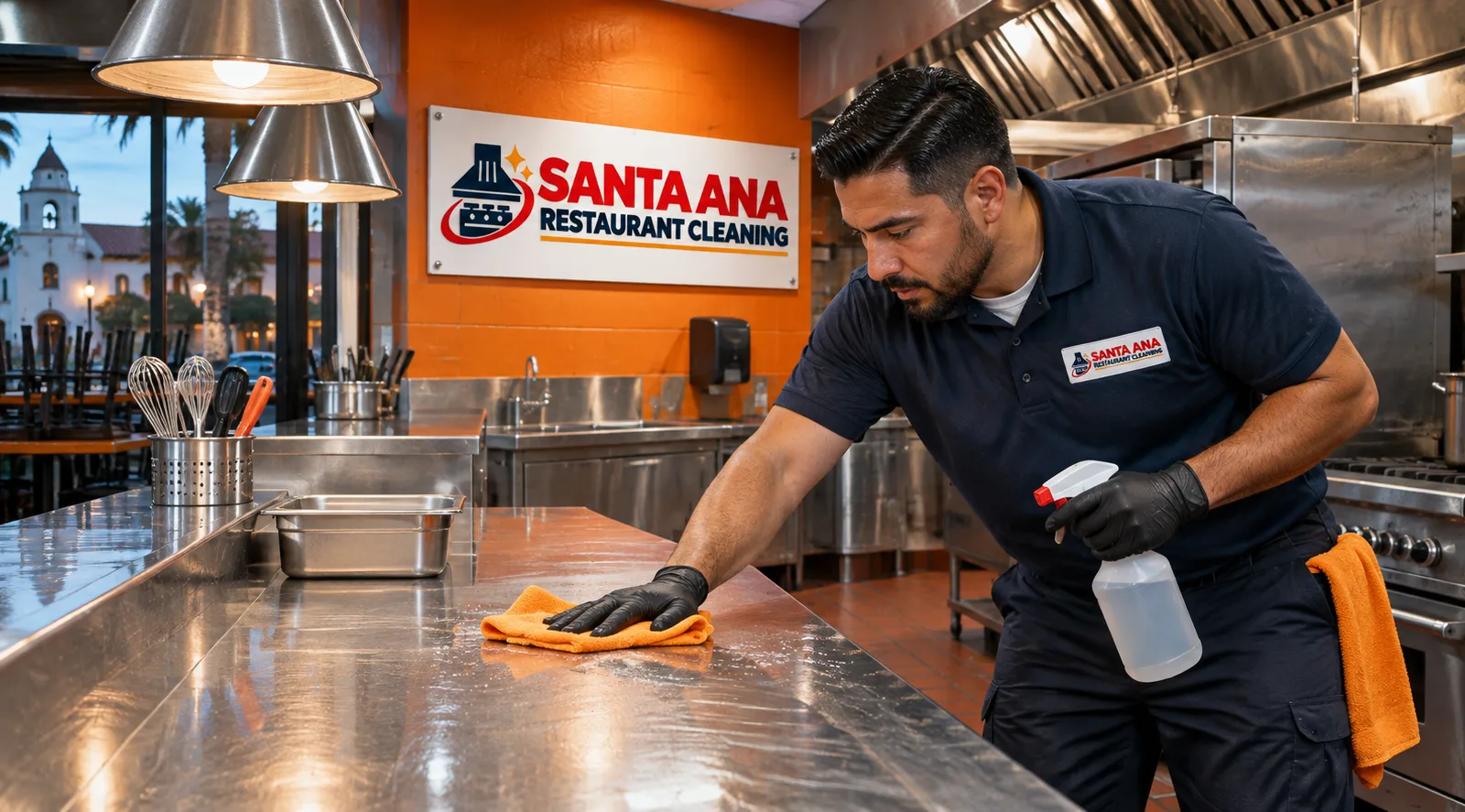
Reliable Restaurant Cleaning in Orange
Restaurant Cleaning Orange requires more than a quick sweep after closing. Grease settles on equipment and nearby surfaces, crumbs collect under fixed furnishings, and high-touch points need consistent attention. Santa Ana Restaurant Cleaning builds the work around the rooms, surfaces, and operating schedule of each restaurant.
Our crews clean kitchens, dining areas, entryways, employee spaces, and restrooms according to an agreed checklist. Our restaurant specialists serving Santa Ana, CA can coordinate service for businesses in nearby Orange while keeping arrival times and access procedures clear. The goal is dependable work that supports your opening routine rather than getting in its way.
Orange has several distinct restaurant settings. Old Towne Orange includes eateries in historic commercial buildings where tighter layouts and older finishes may require careful equipment placement and surface-specific products. Restaurants near The Outlets at Orange can face concentrated guest traffic around shopping and entertainment periods. Along Chapman Avenue, operating hours and delivery activity vary widely, so access planning matters. A walkthrough lets us account for those conditions before setting the scope.
What a Restaurant Cleaning Plan Can Cover
Kitchen Cleaning
Degreasing and cleaning may cover floors, walls, washable work surfaces, sinks, exterior equipment surfaces, shelving, and accessible areas under or behind movable items. Food-contact surfaces receive products and procedures suited to their intended use.
Dining and Guest Areas
Tables, chairs, booths, host stands, ledges, doors, floors, and other touchpoints are cleaned according to the agreed checklist. Floor care is matched to tile, resilient flooring, sealed concrete, or other installed material.
Restaurant Bathroom Cleaning
Restroom service can include toilets, urinals, sinks, counters, dispensers, partitions, mirrors, floors, and touchpoints. Supplies and waste handling can be incorporated when assigned in the scope.
Back-of-House Areas
Dry-storage floors, employee areas, corridors, and waste staging points can be included where access is safe and authorized. The checklist identifies exclusions so managers know exactly what the crew handles.
Periodic Detail Work
Edges, baseboards, grout, wall buildup, vents, and hard-to-reach areas may need work beyond the recurring visit. Rotating these tasks helps prevent the routine checklist from becoming overloaded.
Floor Care
Vacuuming, sweeping, mopping, scrubbing, and spot treatment are selected for the floor and soil type. Greasy kitchen soil requires a different process than beverage spills or tracked debris in a dining room.
Cleaning Methods Built for Food-Service Spaces
A sound cleaning plan separates cleaning from sanitizing. Cleaning removes food residue, grease, and visible soil. Sanitizing follows on appropriate food-contact surfaces after cleaning and reduces microorganisms to acceptable public-health levels when the product is mixed and used according to its label. Applying sanitizer over grease or crumbs skips the removal step and can reduce its effectiveness.
Product choice also matters. Degreasers need suitable dwell time, but they should not be allowed to damage sensitive finishes. Color-coded cloths and tools can help reduce cross-contact between kitchens, dining rooms, and restrooms. Safety Data Sheets should be available for workplace chemicals, and products should never be mixed unless the manufacturer specifically directs it.
Restaurant operators in Orange are regulated by the Orange County Health Care Agency's Environmental Health Division. A cleaning company does not replace management's food-safety duties, pest-control program, equipment maintenance, or required employee practices. It can support those duties through documented, repeatable cleaning that matches the facility's approved procedures.
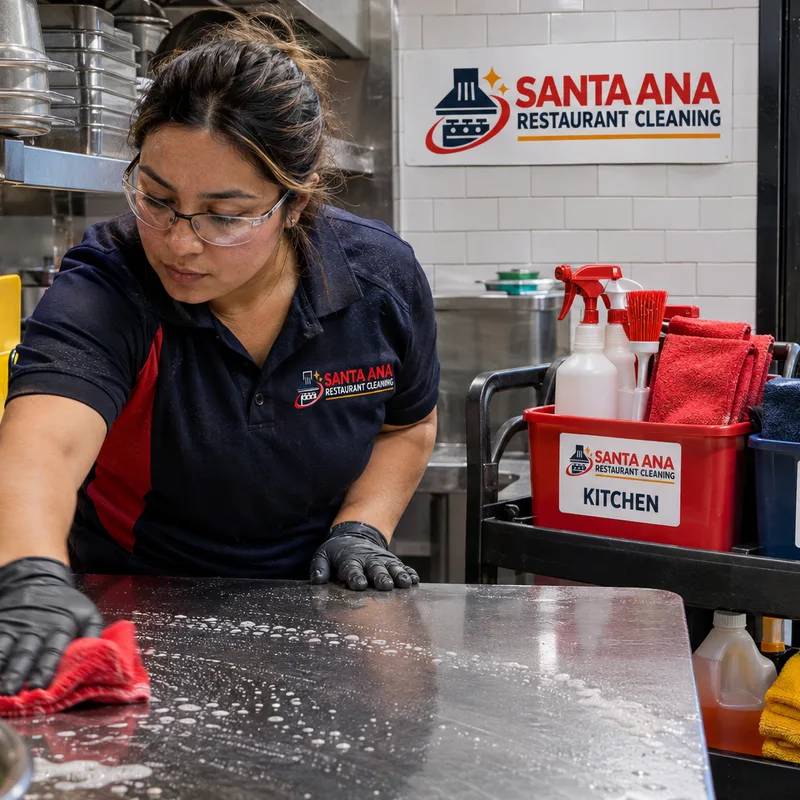
How We Set Up Recurring Restaurant Cleaning
-
01
Walk Through the Restaurant
We review the kitchen, dining room, restrooms, entries, storage areas, floors, access points, and waste procedures. Managers can identify sensitive finishes, restricted equipment, alarm instructions, and tasks already assigned to employees.
-
02
Define the Scope
The written checklist identifies tasks, frequency, service windows, and exclusions. It also separates recurring work from periodic projects such as detailed floor scrubbing, grout attention, or buildup removal.
-
03
Plan Safe Access
We agree on keys or entry procedures, equipment shutdown boundaries, chemical storage, wet-floor controls, and the person who receives service updates. These details are settled before the first routine visit.
-
04
Clean in a Consistent Order
Crews generally work from cleaner zones toward dirtier ones and from higher surfaces toward floors. Restroom tools remain separate, and the agreed closing or pre-opening sequence helps avoid recontaminating finished areas.
-
05
Review and Adjust
Restaurant traffic, menus, and operating hours change. Feedback from managers is used to refine the checklist, correct recurring trouble spots, and schedule deeper work when routine cleaning is no longer enough.
Restaurant Bathroom Cleaning Orange Managers Can Track
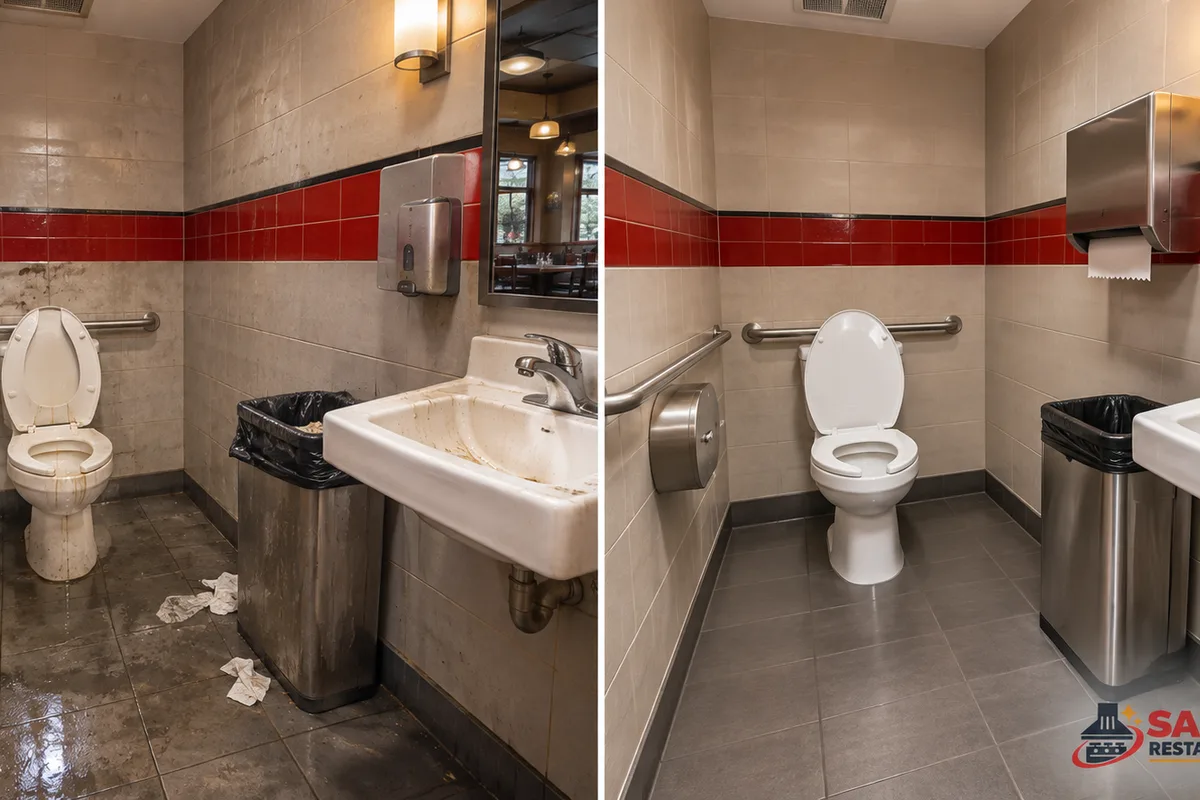
Restrooms influence how guests judge the entire restaurant. A useful bathroom checklist addresses fixtures, partitions, mirrors, dispensers, doors, floors, odors, waste containers, and frequently touched points. It should also state who replenishes soap, tissue, and paper products so supplies do not fall between staff responsibilities.
Restaurant Bathroom Cleaning Orange businesses schedule should reflect actual guest volume. A restroom may need attention during operating hours as well as a full service after closing. Cleaning tools used around toilets and urinals should remain separate from tools used on sinks, dining surfaces, or kitchen areas. Products also need their full label-directed contact time rather than being sprayed and immediately wiped away.
Recurring odor often points to a source that needs direct attention, such as grout, floor edges, waste containers, or buildup around fixtures. If an odor comes from a plumbing or drain problem, cleaning alone will not correct the cause. We report visible maintenance concerns so the restaurant can assign the right trade.
Scheduling That Fits Restaurant Operations
Cleaning can be scheduled after closing, before opening, or during another approved low-activity window. The right timing depends on kitchen shutdown, final dishwashing, employee departure, deliveries, alarm procedures, and the drying time required for floors. We establish a realistic sequence rather than asking restaurant staff to work around an uncertain arrival.
Frequency is based on use and soil load. A compact counter-service restaurant may have different priorities than a full-service dining room with a bar, multiple restrooms, and late closing hours. Some work belongs on every visit, while vents, wall buildup, floor edges, and spaces behind movable equipment may fit a rotating schedule.
Southern California's long dry periods can increase tracked dust around entrances and dining floors. Rainy days create a different concern: moisture and debris enter at doors, increasing the need for mat care and prompt floor attention. The service checklist can account for these practical changes without replacing the core routine.
A walkthrough turns general expectations into a written checklist, service schedule, and clear division of responsibilities for your Orange restaurant.
Call for a Free QuoteQuestions About Restaurant Cleaning in Orange
How is Restaurant Cleaning Orange priced? +−
Recurring restaurant cleaning is usually priced after a walkthrough rather than by a flat citywide rate. The main cost drivers are square footage, service frequency, kitchen grease levels, restroom count, floor type, operating window, access, and the amount of periodic detail work. A written scope lets an Orange restaurant compare proposals based on the same tasks instead of price alone.
Can cleaning take place after our restaurant closes? +−
Yes, after-hours cleaning can be arranged when building access, alarm instructions, kitchen shutdown, and closing duties are clearly coordinated. Restaurants near Old Towne Orange or mixed-use commercial areas may also have property rules that affect entry, parking, noise, or waste access. Those conditions should be identified during the walkthrough.
How often should a restaurant be professionally cleaned? +−
The right frequency depends on guest volume, menu, hours, floor materials, kitchen production, and what employees clean during each shift. High-use restrooms and greasy kitchen floors may need attention every service day, while detailed edges, walls, grout, and spaces behind movable equipment can follow a rotating schedule. The final frequency should match observed soil rather than a generic package.
Do you sanitize food-contact surfaces? +−
Food-contact surfaces can be sanitized when they are included in the agreed scope and the product is approved for that use. Visible food and grease must be removed first, then sanitizer is applied at the labeled concentration and allowed the stated contact time. Restaurant management remains responsible for its food-safety plan and compliance with Orange County Environmental Health requirements.
What is included in Restaurant Bathroom Cleaning Orange service? +−
A restroom scope can include toilets, urinals, sinks, faucets, counters, mirrors, partitions, dispensers, doors, touchpoints, floors, and waste containers. Replenishment can also be assigned if the restaurant provides supplies and includes the task in the checklist. Plumbing repair, drain repair, and fixture replacement require the appropriate maintenance provider.
Can you clean while employees are preparing food? +−
Some low-risk cleaning may be possible during operating hours, but kitchen cleaning should be coordinated to protect exposed food, utensils, employees, and guests. Chemical use, wet floors, spraying, and equipment access can make active production an unsuitable time for many tasks. A pre-opening or post-closing window is often more practical for detailed kitchen work.
How quickly can recurring service begin? +−
The start date depends on walkthrough availability, restaurant size, access arrangements, requested frequency, and the condition of the facility. A restaurant with heavy existing buildup may need an initial detail cleaning before the recurring checklist begins. That first visit and the ongoing schedule are confirmed after the scope has been reviewed.
Set a Clear Cleaning Plan for Your Orange Restaurant
Tell us about your operating hours, priority areas, floor types, and current cleaning routine. We will assess the space and outline a practical scope for the kitchen, dining room, restrooms, and other included areas.