
Restaurant Cleaning Services in Santa Ana
Keep guest areas polished, restrooms fresh, and working spaces ready for the next shift with a cleaning plan built around your hours and priorities.
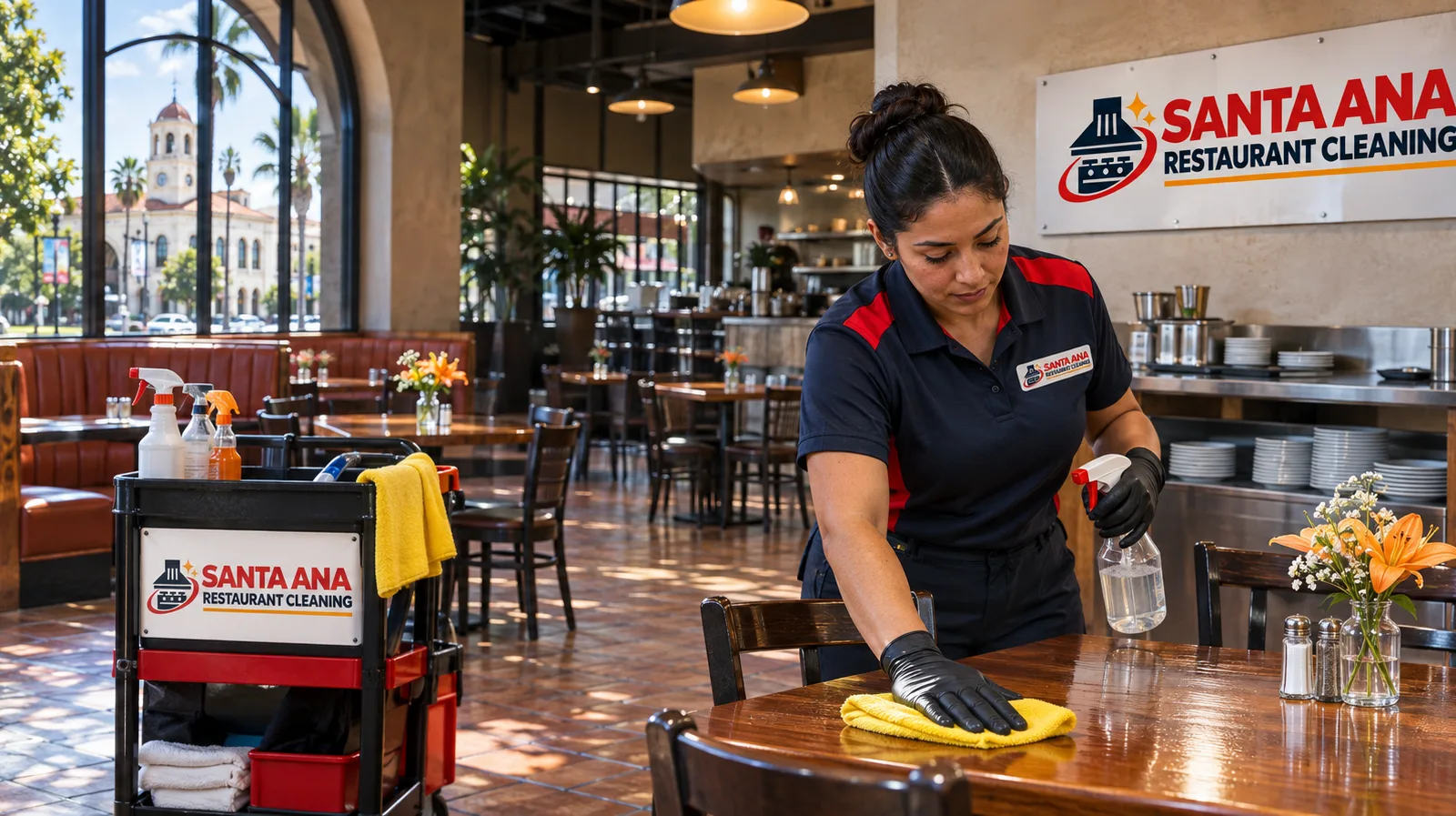
Reliable Restaurant Cleaning Built Around Service Hours
Restaurant Cleaning Services should support daily operations without getting in the way of guests, servers, bartenders, or kitchen staff. Santa Ana Restaurant Cleaning develops practical scopes for dining rooms, bars, restrooms, entry areas, service stations, and back-of-house workspaces. Cleaning can be scheduled before opening, after closing, or during another agreed window based on access and restaurant hours.
We are a professional restaurant company in Santa Ana, CA that organizes the work by area, surface, task frequency, and handoff expectations. That structure matters in restaurants because carpet, resilient flooring, tile, stainless steel, wood finishes, upholstery, and restroom fixtures require different products and methods. A written scope can separate nightly duties from periodic work such as high dusting, detailed floor care, and deeper cleaning around fixed equipment.
Our team is based at 115 N Standard Ave, Suite 5, Santa Ana, CA 92701. That local base is practical for restaurants near Downtown Santa Ana, where dining rooms may have compact layouts and busy evening turnover. Restaurants around MainPlace Mall may need schedules coordinated with retail access and shared traffic patterns. Along the Bristol Street commercial corridor, larger footprints and steady vehicle traffic can increase the soil carried onto entrance flooring.
Restaurant Cleaning Services for Guest and Work Areas
Restaurant Dining Room Cleaning
Dining area cleaning can include tables, chair legs, booths, partitions, ledges, service stations, baseboards, doors, glass touchpoints, and accessible fixtures. The scope accounts for the finish on each surface so soil is removed without leaving haze, residue, or avoidable moisture.
Front of House Cleaning
Restaurant front of house cleaning in Santa Ana covers entrances, host stands, waiting areas, traffic lanes, pickup counters, and other guest-facing spaces. Special attention can be assigned to fingerprints, crumbs, tracked-in grit, and soil that collects along edges.
Restaurant Bar Cleaning
Bar cleaning may cover the counter exterior, stools, rails, footrests, accessible shelving, mirrors, sinks, floor edges, and surrounding service areas. The work plan should clearly distinguish cleaning duties from staff responsibilities for glassware, beverage equipment, and inventory.
Restaurant Restroom Cleaning
Restaurant restroom cleaning in Santa Ana can include toilets, urinals, sinks, mirrors, dispensers, partitions, doors, floors, and touchpoints. Supplies can be checked and documented when replenishment is included in the agreed scope.
Back of House Cleaning
Restaurant back of house cleaning in Santa Ana may address prep-area floors, employee areas, washable walls, accessible equipment exteriors, shelving exteriors, and traffic paths. Food-contact surfaces and specialized equipment are handled only when they are specifically identified in the cleaning plan.
High Dusting
High dusting removes buildup from accessible vents, pipes, beams, light housings, ledges, and the tops of fixtures. The method and frequency depend on ceiling height, safe access, nearby food preparation, and whether the work requires an extension tool or ladder.
Restaurant Floor Cleaning Matched to the Surface
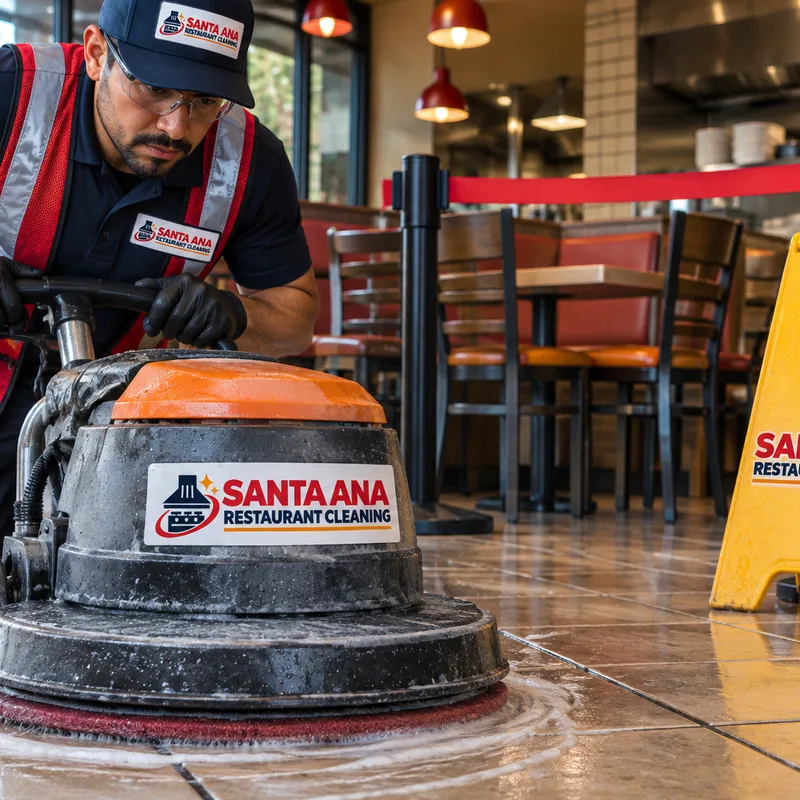
Restaurant floors collect tracked-in grit, crumbs, beverage residue, grease, and moisture. Effective restaurant floor cleaning begins with soil removal, followed by the correct cleaning method for the floor. Tile and grout may need agitation at edges and grout lines. Resilient flooring may require neutral cleaner and controlled moisture. Carpeted dining areas benefit from routine vacuuming plus periodic extraction or low-moisture cleaning when appropriate.
The front entrance deserves its own plan. Dry Southern California weather can carry fine dust inside, while rainy periods bring water and street soil onto mats and hard floors. Entry matting, prompt spot cleaning, and careful attention to corners help control that buildup before it moves into the dining room.
Slip risk is also part of the method. Products must be diluted according to their labels, greasy residue must be removed rather than spread, and the floor should be left dry before normal traffic resumes. Wet-floor signs and controlled access are used while work is underway. Areas near fryers, dish stations, and bars often need different chemistry and dwell time than a guest dining floor.
How We Set Up a Restaurant Cleaning Plan
-
01
Walk the Restaurant
We review the dining room, bar, restrooms, entries, service stations, and agreed back-of-house areas. The walkthrough identifies floor materials, access restrictions, high-touch points, soil conditions, storage considerations, and any surfaces that require special care.
-
02
Define Duties and Frequencies
The written scope lists what is cleaned, how often it is cleaned, and what remains with restaurant staff or another vendor. Nightly work can be separated from weekly, monthly, or periodic tasks such as high dusting, upholstery care, and deeper floor cleaning.
-
03
Coordinate Access and Safety
Cleaning windows are matched to opening and closing routines. Keys, alarms, lockup duties, restricted areas, chemical storage, and end-of-shift contacts are agreed upon before recurring service begins.
-
04
Clean in a Consistent Order
Crews generally work from higher surfaces to lower ones and from cleaner zones toward heavier soil. Dry debris is removed before wet cleaning, restroom tools stay separated, and floors are completed after surrounding surfaces whenever the layout permits.
-
05
Review and Adjust
Managers can report changing traffic patterns, event schedules, recurring problem spots, or seasonal needs. The scope can then be adjusted instead of leaving important work dependent on informal instructions.
Front and Back of House Need Different Controls
Guest-facing areas are judged under dining-room lighting and at close range. Fingerprints on entry glass, dust on ledges, residue under tables, and soil around booth bases can affect the impression of the entire room. Front of house cleaning therefore combines broad floor care with detailed attention to edges, fixtures, furniture bases, and visible touchpoints.
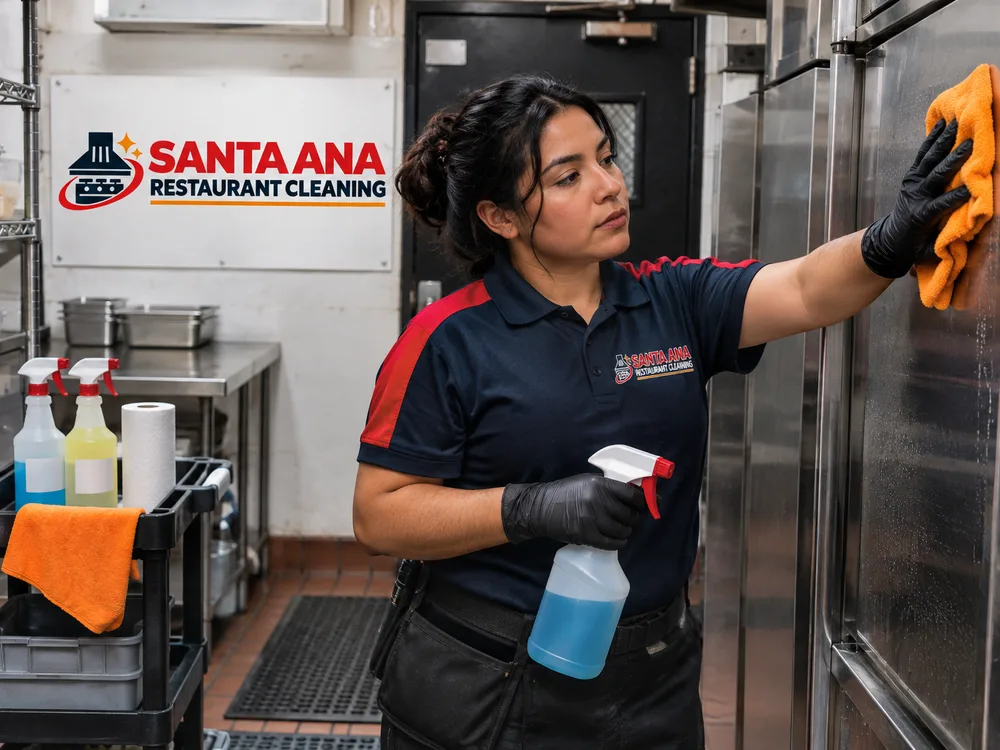
Back-of-house work requires tighter coordination. Cleaning should not begin around active food preparation, exposed ingredients, hot equipment, or moving staff. Chemicals must stay in labeled containers and be used according to their product instructions. Color-coded cloths, mop heads, or tools can help keep restroom equipment separate from dining and food-service areas.
A general cleaning scope also needs clear limits. Hood and duct cleaning, pest control, hazardous material cleanup, and servicing internal equipment components are specialized tasks and should not be implied by routine janitorial work. Santa Ana restaurants are subject to food facility oversight by the Orange County Health Care Agency, but a cleaning company does not replace management's sanitation procedures, employee training, or regulatory responsibilities.
What Determines the Cleaning Scope and Price?
Restaurant cleaning is usually priced after the space and duties are reviewed because square footage alone does not show the amount of labor involved. A compact restaurant with tightly spaced booths, several restrooms, and heavy late-night traffic may require more detailed work than a larger open dining room.
The main price factors are service frequency, operating hours, floor type, number of restrooms, bar and dining-room layout, current condition, access, high dusting requirements, supply responsibilities, and the depth of back-of-house cleaning. Upholstery, interior glass, machine floor care, grout detailing, and periodic deep cleaning should be identified separately when they are not part of routine service.
A useful proposal names the included areas and tasks, the proposed schedule, periodic work, exclusions, access arrangements, and how quality concerns are reported. It should also state whether the restaurant or cleaning company provides consumables such as liners, paper products, and hand soap. Santa Ana Restaurant Cleaning confirms the exact price after a walkthrough and scope discussion.
Get a written cleaning scope that fits your restaurant's hours, surfaces, traffic, and division of staff duties.
Call for a Free QuoteRestaurant Cleaning Questions
How often should a Santa Ana restaurant be professionally cleaned? +−
The right frequency depends on operating days, guest volume, menu, floor materials, and what employees already clean during each shift. Dining floors, restrooms, entrances, and bars often need attention every operating day, while high dusting and detailed edge work can follow a periodic schedule. A walkthrough separates routine tasks from weekly or monthly work.
Can cleaning take place after the restaurant closes? +−
Yes, restaurant cleaning can be scheduled after closing when access, alarms, lockup duties, and the required completion time are agreed upon. Downtown Santa Ana restaurants with late service or entertainment traffic may need a later start, while other locations may prefer work before opening. The schedule must leave enough time for cleaned floors to dry before staff return.
What affects the cost of Restaurant Cleaning Services? +−
Price is driven by labor, frequency, condition, layout, floor types, restroom count, access, and the exact task list. Bar areas, tightly spaced furniture, greasy back-of-house floors, high fixtures, and machine floor work can add time. The dependable way to price a Santa Ana restaurant is to inspect the space and provide a written scope.
Do you provide Restaurant Front of House Cleaning in Santa Ana? +−
Yes, front of house cleaning can cover entrances, host areas, dining rooms, pickup counters, bars, service stations, guest restrooms, and the associated floors. The final checklist is tailored to the restaurant's materials and operating routine. Staff duties such as resetting tables or handling food-service items should be stated separately.
What can Restaurant Back of House Cleaning in Santa Ana include? +−
Back-of-house cleaning can include agreed floors, washable walls, employee areas, accessible equipment exteriors, shelving exteriors, and traffic lanes. It does not automatically include hood systems, internal equipment, pest control, or hazardous cleanup. Food must be protected or removed, and cleaning is coordinated around shutdown and cool-down procedures.
Is high dusting safe around a dining or preparation area? +−
High dusting can be performed safely when the area is closed, food and clean utensils are protected, and the correct access equipment is used. Dust is removed from vents, pipes, beams, ledges, and light housings before lower surfaces and floors are cleaned. Ceiling height and access determine whether the task belongs in routine work or a separate scheduled visit.
Can you clean different restaurant flooring materials during one visit? +−
Yes, one visit can cover multiple flooring materials when the crew has the correct products, tools, and time for each surface. Tile and grout, resilient flooring, sealed concrete, and carpet should not receive one identical method. Entrance soil and greasy kitchen residue also require different treatment, so each floor zone is documented during the walkthrough.
Build a Cleaner Plan for Your Restaurant
Tell us about your dining room, bar, restrooms, floors, operating hours, and back-of-house priorities. We will review the work and define a practical scope before service starts.