
Restaurant Cleaning Costa Mesa
Detailed cleaning for commercial kitchens, dining rooms, restrooms, and floors, scheduled around your operating hours and built around a written scope.
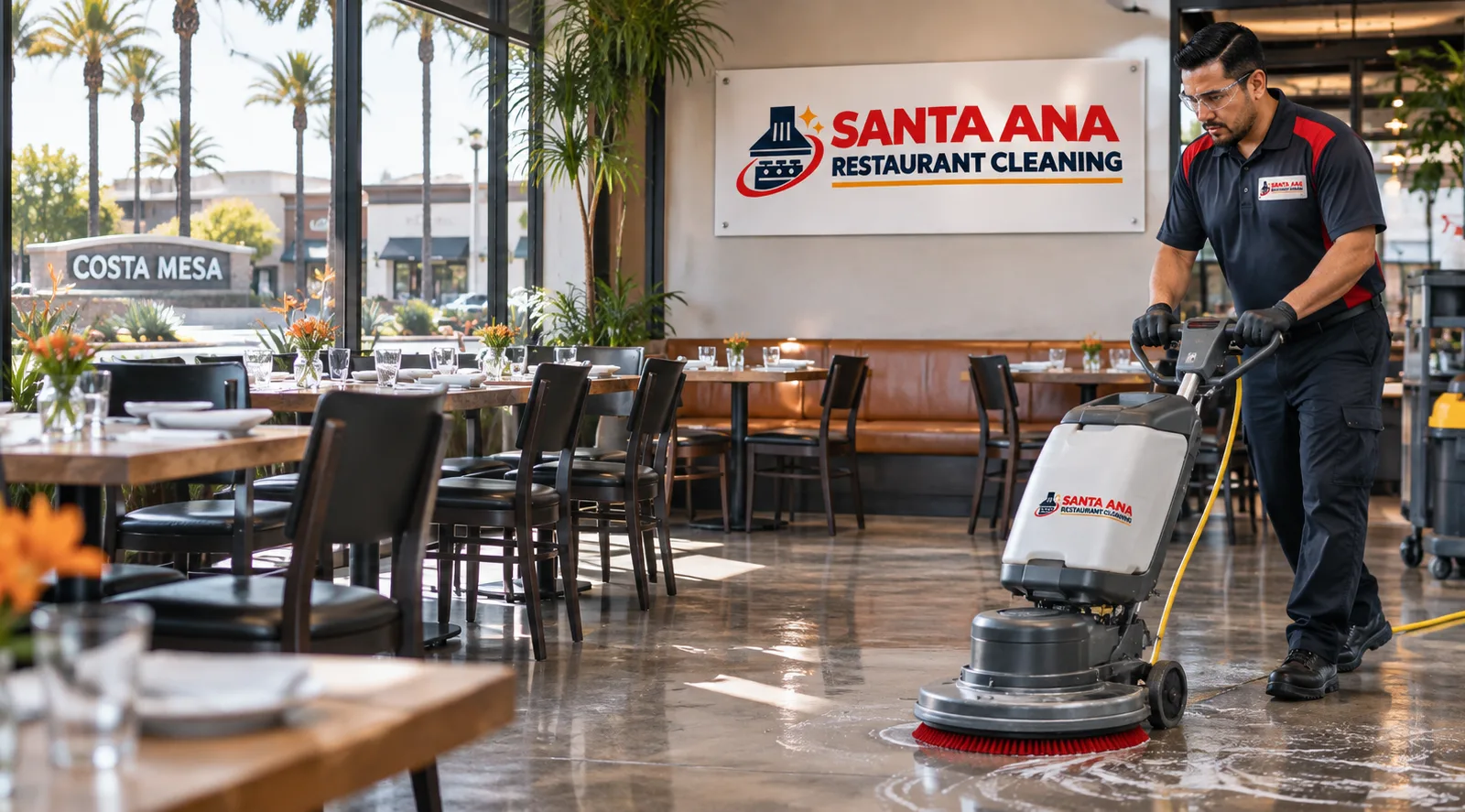
Reliable Cleaning Built Around Restaurant Operations
Restaurant Cleaning Costa Mesa businesses depend on should address the areas guests notice and the spaces employees use during every shift. Santa Ana Restaurant Cleaning provides recurring and project-based cleaning for dining rooms, commercial kitchens, restrooms, entry areas, and back-of-house work zones. The scope can be set for nightly, weekly, or custom service, with tasks assigned according to the condition and use of each area.
Restaurants cannot treat cleaning like ordinary office work. Grease migrates beyond the cooking line, food residue collects beneath equipment, and repeated foot traffic leaves soil in entryways and dining areas. Cleaners must also work around prep schedules, closing procedures, stored ingredients, and sensitive equipment. Our team approaches the work as a professional restaurant company in Santa Ana serving nearby Costa Mesa businesses with clear task lists and practical scheduling.
Costa Mesa presents several distinct operating settings. Restaurants near South Coast Plaza often manage high guest traffic and polished public areas. The dining businesses around The LAB Anti-Mall and The CAMP may have compact layouts, patios, and frequent transitions between indoor and outdoor traffic. Along Harbor Boulevard, quick-service and casual restaurants often need close attention to entrances, service counters, and heavily used floors. The scope should reflect the actual layout and service pattern rather than a generic checklist.
What Our Restaurant Cleaning Services in Costa Mesa Cover
A useful cleaning plan separates front-of-house presentation from back-of-house soil removal while keeping both under one coordinated scope.
Dining-area work may include vacuuming or mopping floors, wiping tables and chair frames, cleaning partitions, removing fingerprints from glass, dusting accessible ledges, and tending to entry doors. Restroom service can cover toilets, urinals, sinks, mirrors, partitions, dispensers, floors, and touchpoints. Waste is removed according to the agreed scope, and liners are replaced where supplies are provided.
Back-of-house cleaning may address degreasing of accessible walls and hard surfaces, floors beneath movable equipment, floor edges, prep-area exteriors, shelving exteriors, sinks, and washable floor mats. The precise list matters. Exhaust duct cleaning, hood-system service, pest control, and servicing the internal parts of cooking equipment are specialized tasks and should not be assumed unless they are expressly included.
We match chemicals and tools to the surface. A neutral cleaner may be appropriate for routine finished-floor care, while an alkaline degreaser is used where compatible surfaces have oily buildup. Food-contact surfaces require products and procedures suitable for those areas, including any label-directed rinse or contact time. Safety data sheets and manufacturer directions guide product handling.
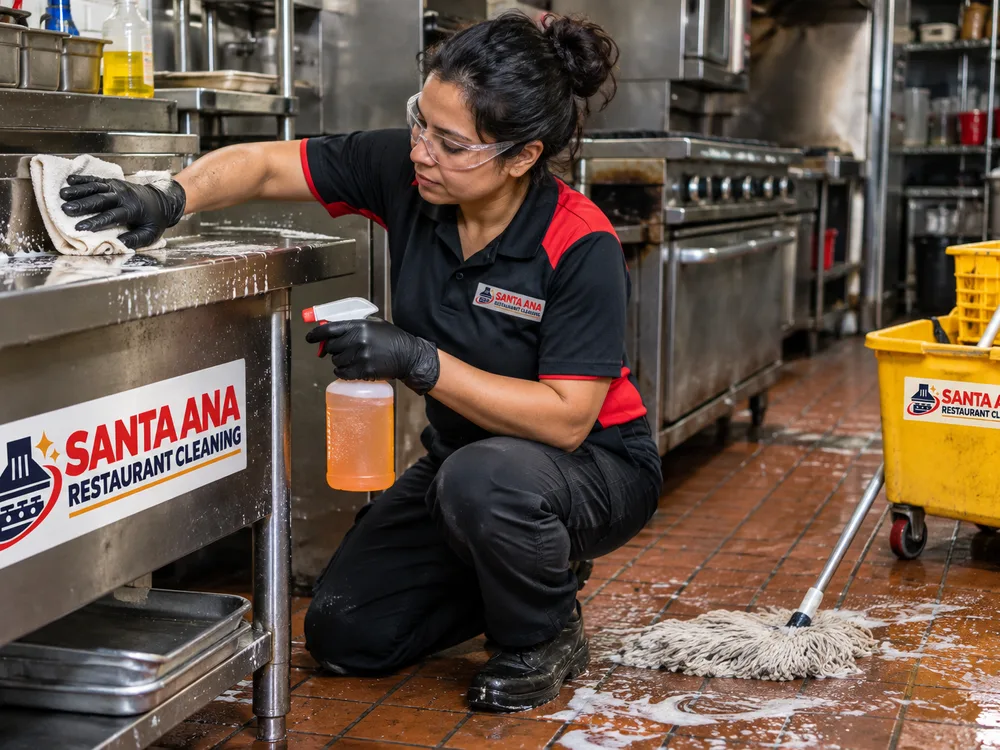
Back-of-house cleaning should account for grease, equipment access, and food-area procedures.
Dining Rooms and Guest Areas
Floors, tables, chair frames, ledges, glass, partitions, waiting areas, and visible touchpoints receive attention based on daily traffic and presentation standards.
Commercial Kitchen Surfaces
Accessible floors, wall areas, equipment exteriors, prep-area exteriors, sinks, shelving exteriors, and washable mats can be included in a defined back-of-house scope.
Restrooms
Fixtures, partitions, mirrors, dispensers, touchpoints, and floors are cleaned with separate tools and procedures that reduce cross-contamination between work zones.
Floor Care
Routine sweeping, vacuuming, mopping, and machine scrubbing are selected according to the flooring material, finish, grease level, and manufacturer guidance.
Detail and Reset Cleaning
Periodic work can target edges, baseboards, buildup beneath movable items, vents, high dust within safe reach, and other areas outside the nightly routine.
Custom Scheduling
Service can be planned after closing, before opening, or during another agreed access window to limit interference with staff, deliveries, and food preparation.
How We Build Your Cleaning Plan
-
01
Walk Through the Restaurant
We review the dining room, kitchen, restrooms, entrances, flooring, access points, and any areas that need special handling. Existing buildup and movable equipment are identified before the scope is set.
-
02
Define Tasks and Frequency
You receive a clear division between recurring tasks and periodic detail work. This also identifies exclusions, supply responsibilities, access arrangements, and the hours available for cleaning.
-
03
Prepare the Work Areas
Restaurant staff secure food, personal items, cash, and sensitive tools as agreed. Our cleaners organize equipment and products by work zone to reduce the chance of cross-contamination.
-
04
Clean in a Controlled Sequence
Work generally moves from cleaner areas toward dirtier areas and from higher surfaces toward floors. Separate cloths, mop heads, and tools can be designated for kitchens, dining areas, and restrooms.
-
05
Review and Adjust
The completed work is checked against the task list. Recurring plans can be adjusted when operating hours, seating arrangements, menu production, or traffic patterns change.
Why Restaurant Floors Need a Specific Method
Restaurant floors deal with tracked-in grit, food particles, beverage residue, and grease. One method will not suit every surface. Quarry tile and grout in a kitchen can require agitation and grease removal, while resilient flooring in a dining area may need a neutral product that will not damage its finish. Slip-resistant floors also have textured surfaces that trap soil and need suitable brushes or machine pads.
Preparation affects the outcome. Dry debris should be removed before wet cleaning, and greasy areas may need dwell time so the product can loosen residue. Too much chemical can leave a film that attracts soil or makes a floor feel slick. The correct dilution, agitation, pickup, and rinse procedure depends on the product label and floor type.
Coastal Southern California weather is generally mild, but dry periods still allow grit and fine debris to enter through busy doors. Restaurants with patios or frequent indoor-outdoor traffic may need more attention at thresholds and along primary walking routes. During rainy conditions, entry mats and prompt moisture control become more important because wet floors create an immediate slip concern.
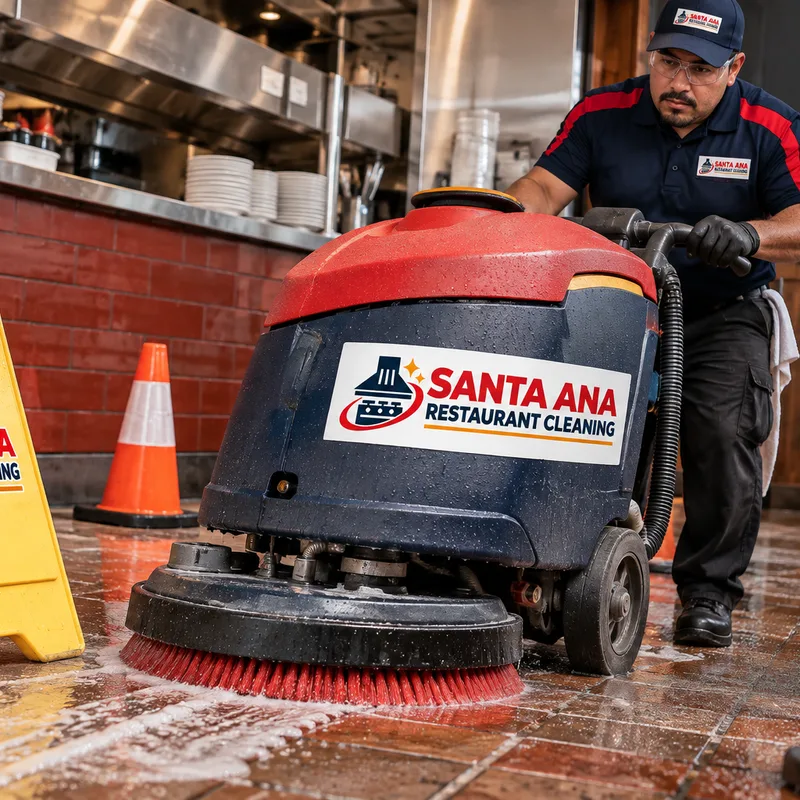
Floor chemistry, agitation, and pickup should match the material and soil level.
Restaurant Cleaning Costa Mesa Managers Can Verify
A cleaning agreement works best when the scope can be checked. Each area should have named tasks, a frequency, and a practical definition of completion. For example, “clean kitchen floor” may include removing loose debris, applying a compatible cleaner, agitating greasy sections, cleaning reachable edges, picking up the solution, and leaving the surface ready for normal use. A vague line item does not establish the same expectation.
Ask how cleaners separate restroom tools from kitchen and dining-room tools. Color-coded cloths, dedicated mop equipment, fresh solutions, and correct glove changes are straightforward controls. Ask which party moves equipment, supplies consumables, unlocks the building, and responds when a scheduled service conflicts with maintenance or a late closing.
Cleaning also supports, but does not replace, the restaurant operator's food-safety duties. The Orange County Health Care Agency oversees retail food facility inspections in Costa Mesa. Operators remain responsible for their sanitation procedures, employee practices, equipment maintenance, and compliance requirements. A commercial cleaning company should follow the agreed scope without making unsupported claims that its work guarantees an inspection result.
Arrange a walkthrough to identify priorities, confirm access, and receive a cleaning scope suited to your restaurant's hours and surfaces.
Call for a Free QuoteQuestions About Restaurant Cleaning Services Costa Mesa Businesses Ask
How much does restaurant cleaning cost in Costa Mesa? +−
Restaurant cleaning is usually priced after a walkthrough because square footage alone does not show the labor involved. The number of restrooms, kitchen grease level, floor material, equipment access, cleaning frequency, and requested service window all affect cost. A lightly used dining room and a high-volume kitchen require different staffing and products. Santa Ana Restaurant Cleaning confirms the exact price after reviewing the Costa Mesa facility and preparing a written scope.
Can cleaning be scheduled after our restaurant closes? +−
Yes, service can be planned for an agreed period after closing or before opening when access and task duration permit. The schedule should allow enough time for floors to dry, secured areas to remain protected, and staff to complete their closing duties. Restaurants near active dining destinations such as South Coast Plaza or The LAB may need a flexible start time when guest traffic varies by day.
How often should a restaurant schedule professional cleaning? +−
The right frequency depends on traffic, food production, closing routines, and the amount of cleaning handled by restaurant employees. High-use floors and restrooms may need service each operating day, while ledges, baseboards, and other detail areas can follow a periodic rotation. A walkthrough separates daily presentation tasks from weekly or scheduled deep-cleaning work.
Do you clean underneath restaurant equipment? +−
Accessible areas beneath movable equipment can be included when movement is safe and agreed in advance. Heavy, connected, hot, or fragile equipment may require restaurant staff or a qualified equipment professional to disconnect and move it. The walkthrough identifies access limits so the written scope states which floor and wall areas can be reached.
Are cleaning products appropriate for food-service areas? +−
Products should be selected for the surface, soil, and intended area, then used according to the manufacturer's label. Food-contact areas may require a suitable cleaner or sanitizer, the specified contact time, and a potable-water rinse when directed. Restaurant staff should secure uncovered food and utensils before service, and the cleaner should keep restroom tools separate from kitchen tools.
Does regular restaurant cleaning include hood and exhaust-system cleaning? +−
No, routine janitorial cleaning should not be assumed to include the internal hood, duct, fan, or fire-suppression system. Those systems require specialized access and procedures. Accessible exterior surfaces may be listed separately, but the agreement should clearly distinguish ordinary surface cleaning from professional kitchen exhaust-system service.
How quickly can a new Costa Mesa restaurant cleaning plan begin? +−
The start date depends on walkthrough availability, facility size, required staffing, access arrangements, and whether an initial reset cleaning is needed. A restaurant with substantial grease or floor buildup may benefit from a detailed first service before recurring work starts. Once the scope and schedule are approved, the service date can be confirmed.
Set a Clear Standard for Every Cleaning Visit
Tell us about your dining room, kitchen, floors, operating hours, and current problem areas. We will outline the tasks, frequency, access needs, and practical next steps before work begins.